How to Choose the Right Interior Designer for Your Office Remodel
Office remodels fail for predictable reasons: the space looks good on day one, then wears poorly. Or the layout never fixes the daily friction. Or the process drags on and disrupts the team.
If you’re hiring a modern office interior designer in Portland, this FAQ will help you choose someone who can protect brand perception, durability, and day-to-day operations, not just aesthetics.
FAQ: Choosing an Office Remodel Interior Designer
What should a modern office interior designer actually do for an office remodel?
At minimum, they should translate your goals into a workable plan and manage the design decisions that affect function and longevity. In practice, that means:
space planning that supports how your team works
durable, commercial-appropriate material and furniture selections
a process that keeps the office running during the refresh (phasing, install planning)
What’s the difference between a “decorator” and a commercial interior designer?
The difference is usually systems thinking. A commercial interior designer designs for:
traffic patterns, meeting rhythms, and operational flow
materials that hold up under daily use
client-facing credibility (reception, conference rooms, presentation areas)
What questions should I ask before hiring?
Use this shortlist in your intro calls:
How will you keep our office operational during the project?
Show me an example of a durable spec decision and why you chose it. (finish, wall protection, upholstery)
How do you prevent “looks great on day one” choices that wear fast?
What’s your procurement approach and how do you handle damaged/delayed items?
How do you help leadership avoid trendy regret while still feeling current?
What are the decision checkpoints, and what do you need from us at each point?
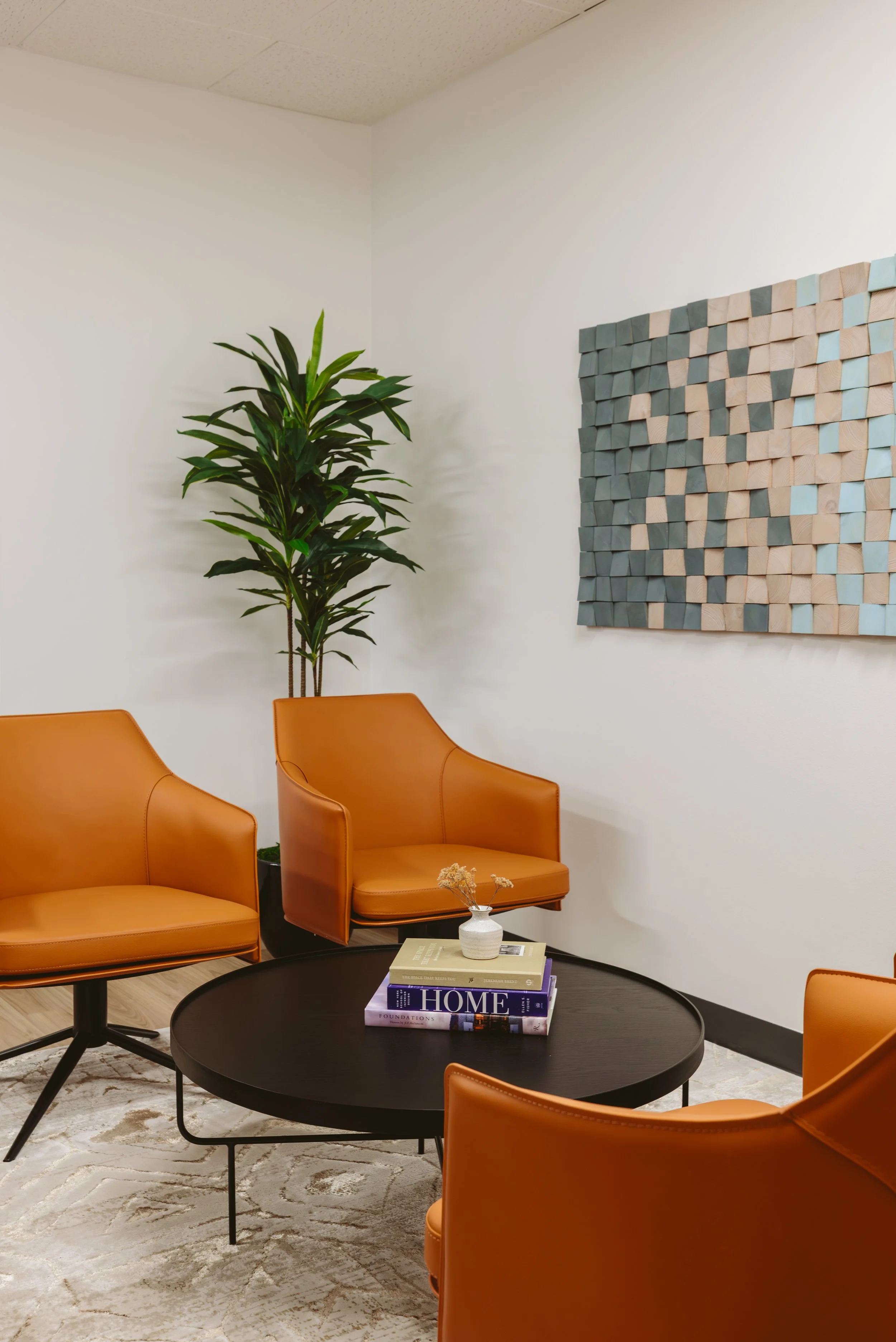
What should I look for in their portfolio (besides “nice photos”)?
Look for proof of:
client-facing credibility (reception, meeting rooms, hospitality moments)
timeless, premium feel without gimmicks
heavy-use durability (materials that still look good after real traffic)
Bonus points if they explain the “why” behind decisions, not just the final reveal.
How do I know if they can design for durability?
Ask for specifics. A designer who understands durability will comfortably talk about:
high-touch surfaces and how they age (scuffs, stains, cleaning)
materials chosen for maintenance realities
where they recommend protection (corridors, reception, pantry areas)
If the answers stay vague, that’s a red flag.
What does a “good process” look like?
A good process reduces risk: clear scope, clear checkpoints, clear procurement plan, and a rhythm that respects that your office is still running (no chaos, no endless revising)
What’s the tradeoff: trendy “modern” vs timeless modern?
Recommendation: choose “modern” through proportions, lighting, and materials that age well, not a handful of trend signals that date quickly.
Avoid: choices that look cool in a photo but turn into a maintenance problem after a month of client traffic.
What’s Portland-specific that should affect our decisions?
Two practical Portland/PNW considerations:
Light: gray-season days make lighting strategy and warmth matter more than people expect.
Timelines: lead times and scheduling matter if you’re trying to refresh without shutting down operations (plan procurement early)
How much of the project should we expect the designer to handle?
If you want less internal burden, look for full-service capability: planning, selections, and coordination that supports productivity and team experience.
If your biggest fears are wear-and-tear, trendy regret, and disruption, you’re not looking for “ideas.” You’re looking for a designer with a durable spec strategy and a process that keeps the business running.
Request full service design inquiry to get a scope recommendation for your office remodel in Portland.
Want a modern office that reads premium and holds up to real life? Request a full service design inquiry and tell us what’s not working now (client perception, layout, durability, disruption)