Full-Service Interior Design For Commercial Spaces: What It Actually Includes
Remote work changed expectations. For many roles, coming into an office has to feel worth it—more comfortable, more functional, and more supportive of focus and collaboration than working at home.
For teams that do need in-person work to thrive, the question isn’t “How do we force people back?” It’s: Does the space make it easier to do great work together?
That’s where full-service commercial interior design comes in.
What does “full-service” mean in plain English?
Full-service commercial interior design is end-to-end support—from defining what the space needs to do, to planning the layout, selecting materials and furnishings, managing ordering, coordinating deliveries and installers, and guiding the project through installation.
The goal is simple: a finished workspace that functions well and feels cohesive—without you becoming the project manager.
What’s included in a full-service scope?
While every studio structures it a bit differently, full-service typically includes:
Discovery + goals: how your team works, where the space breaks down, what needs to improve
Space planning: layout, flow, zones for focus/calls/collaboration, meeting room mix
Design direction: look + feel, materials, lighting approach, brand alignment
Selections + specs: furniture, lighting, finishes (with durability in mind)
Procurement: sourcing, ordering, tracking lead times, handling issues
Coordination + install: delivery logistics, installers, punch list, final setup
What problems does full-service solve (besides “making it look better”)?
Most office frustration is friction:
too loud to focus
nowhere to take calls
meeting rooms always booked (or always empty)
awkward circulation, clutter, not enough storage
lighting that feels dim, harsh, or fatiguing
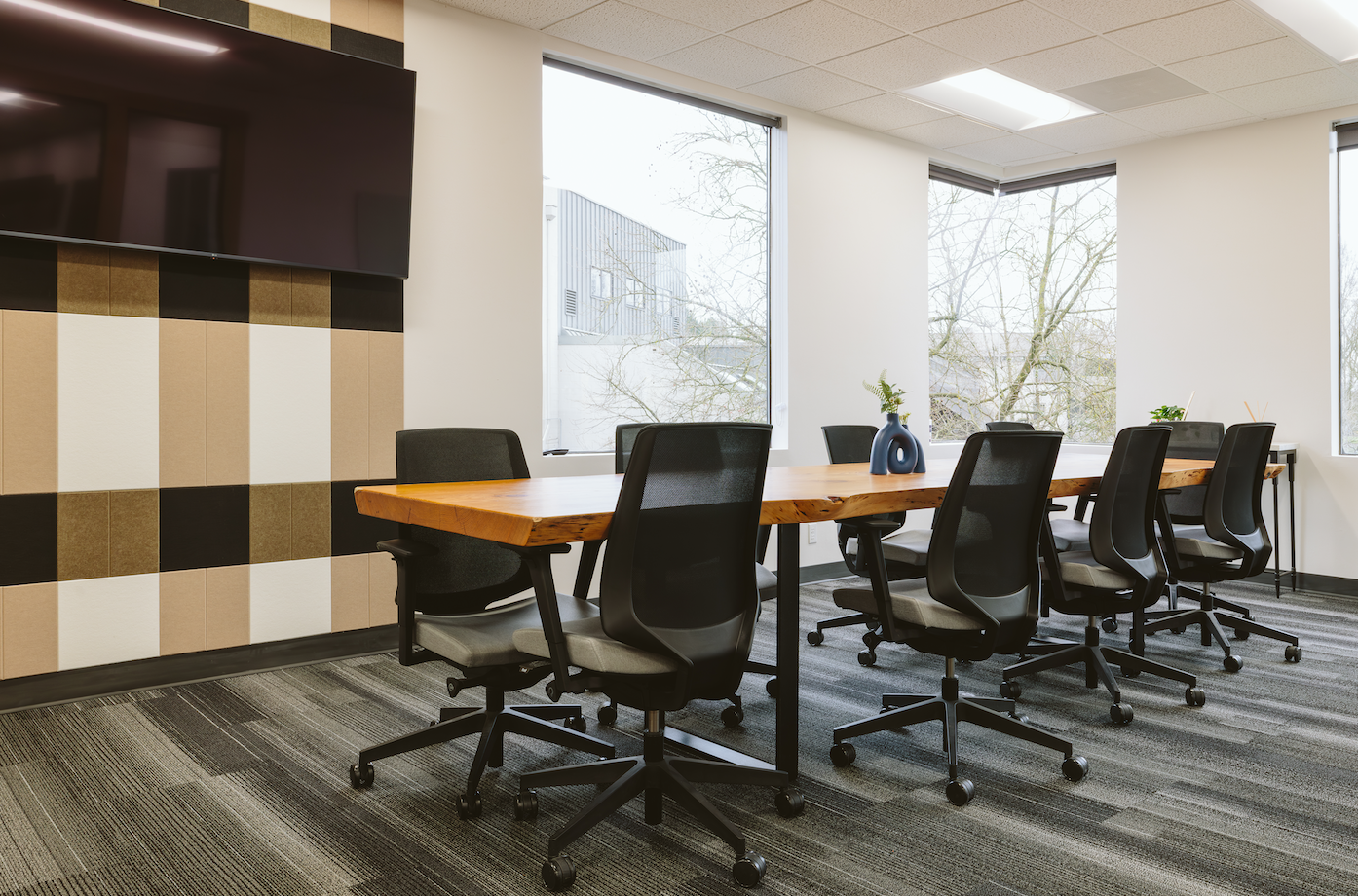
Full-service addresses the “system” (layout + lighting + acoustics + furnishings), not just the aesthetics.
Is full-service worth it if we’re hybrid?
Often, yes—because hybrid offices need better planning, not less. When fewer people come in, every square foot needs a purpose: touchdown spots, effective meeting areas, focused work zones, and a client experience that still feels intentional.
How do you design an office that motivates people to come in?
Not with gimmicks. Usually, it’s these fundamentals:
clear zones for different work modes
comfort (seating, lighting, temperature considerations
fewer distractions (acoustics + layout)
“easy collaboration” spaces that don’t interrupt deep work
a space that reflects the company’s values and brand in a grounded way
People come in when the space supports how they work now.
What’s not included (or not always included)?
This varies by project, but common “not automatically included” items are:
major construction management (if it becomes a build, scope may expand)
permitting/code consulting (sometimes handled by architect/GC)
IT/security systems
specialized commercial equipment
A good full-service proposal spells out what’s included, what’s optional, and what’s out of scope.
What’s the biggest mistake companies make when trying to DIY it?
Buying furniture before solving the layout.
That’s how teams end up with:
seating that doesn’t fit circulation
meeting rooms that still don’t work
“nice pieces” that don’t feel cohesive
time lost returning/reordering/patching gaps
Full-service works best when decisions are made in the right order:
plan → specify → procure → install
What should we prepare before reaching out?
If you have these, the process moves faster:
a rough floor plan (even a basic one)
headcount now + expected growth
the main complaints you keep hearing
photos of the space (and any inspiration that feels on brand)
your timeline constraints (move, lease renewal, reorg)
How long does a full-service commercial project take in Portland?
Timelines depend on scope and lead times. The biggest variable is usually procurement and scheduling—not design. If you’re trying to minimize disruption, planning install windows early matters.

Treestar Dispensary
Ready for clarity on scope?
If you want a clear recommendation for what your office needs (and what it doesn’t), Request a full service design inquiry. Share your space, your goals, and the friction points—and we’ll outline a smart path forward.