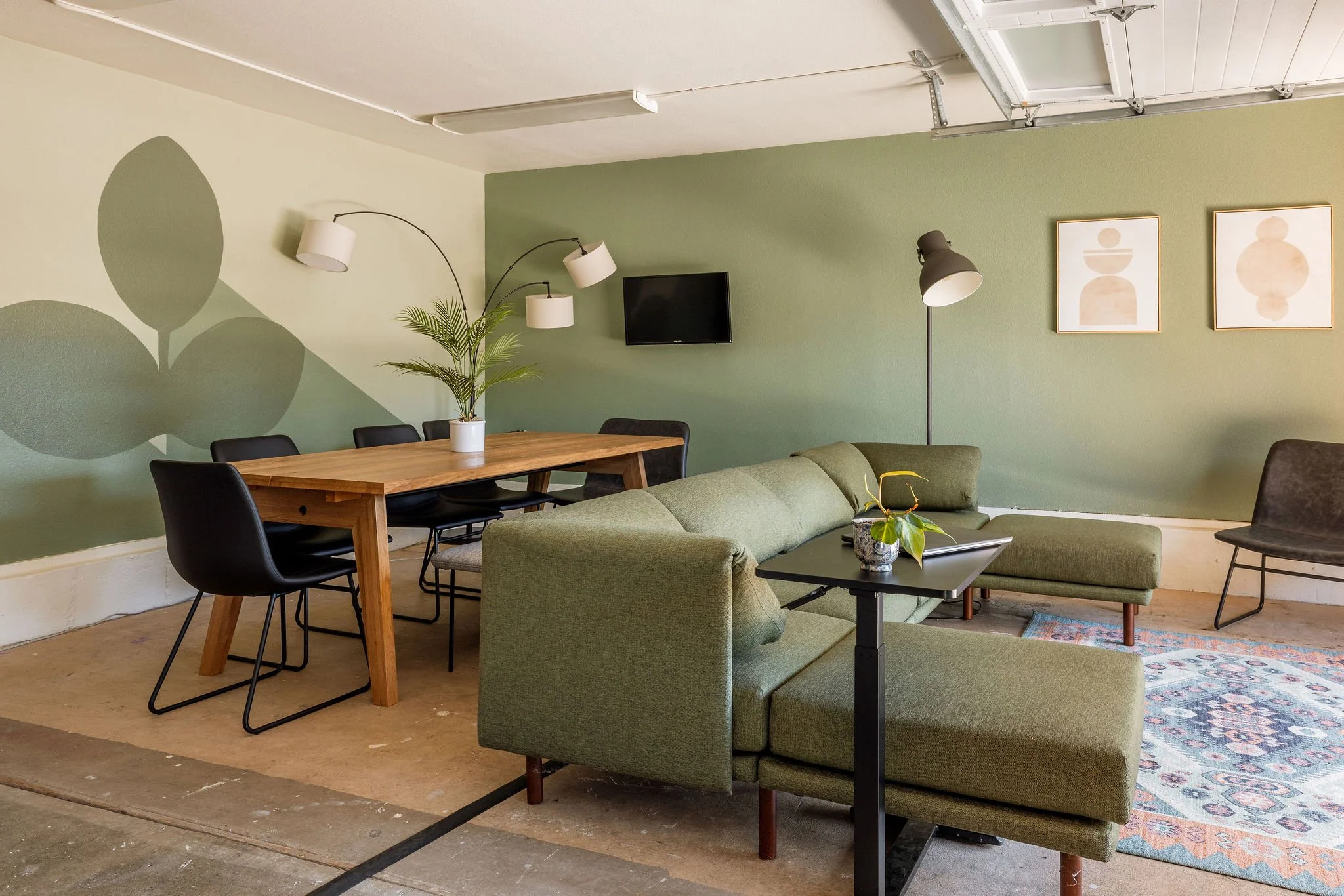
Modern can be the easiest style word to say—and the hardest to define. In discovery with clients, I’ll use style keywords as a starting point, but we don’t stop there. I want to understand who you are, how your team works day to day, what energizes you, and what makes a space feel good to be in. “What style do you like?” alone isn’t enough.
Direct answer: In commercial interiors, modern usually means clarity: clean lines, thoughtful proportions, functional layouts, and a restrained palette—paired with materials and details that support focus, calm, and daily durability. (It shouldn’t feel cold.)
What do we even mean when we say “modern”?
Modern is less about a specific look and more about principles:
Intentional editing (fewer, better choices)
Function-forward planning (layout supports how people work)
Honest materials (wood, stone, metal, textiles used thoughtfully)
Visual calm (not busy, not cluttered)
Not modern: “white box minimalism,” trendy shapes that date fast, or a space that photographs well but feels uncomfortable by 2pm.
What makes modern interesting and appealing?
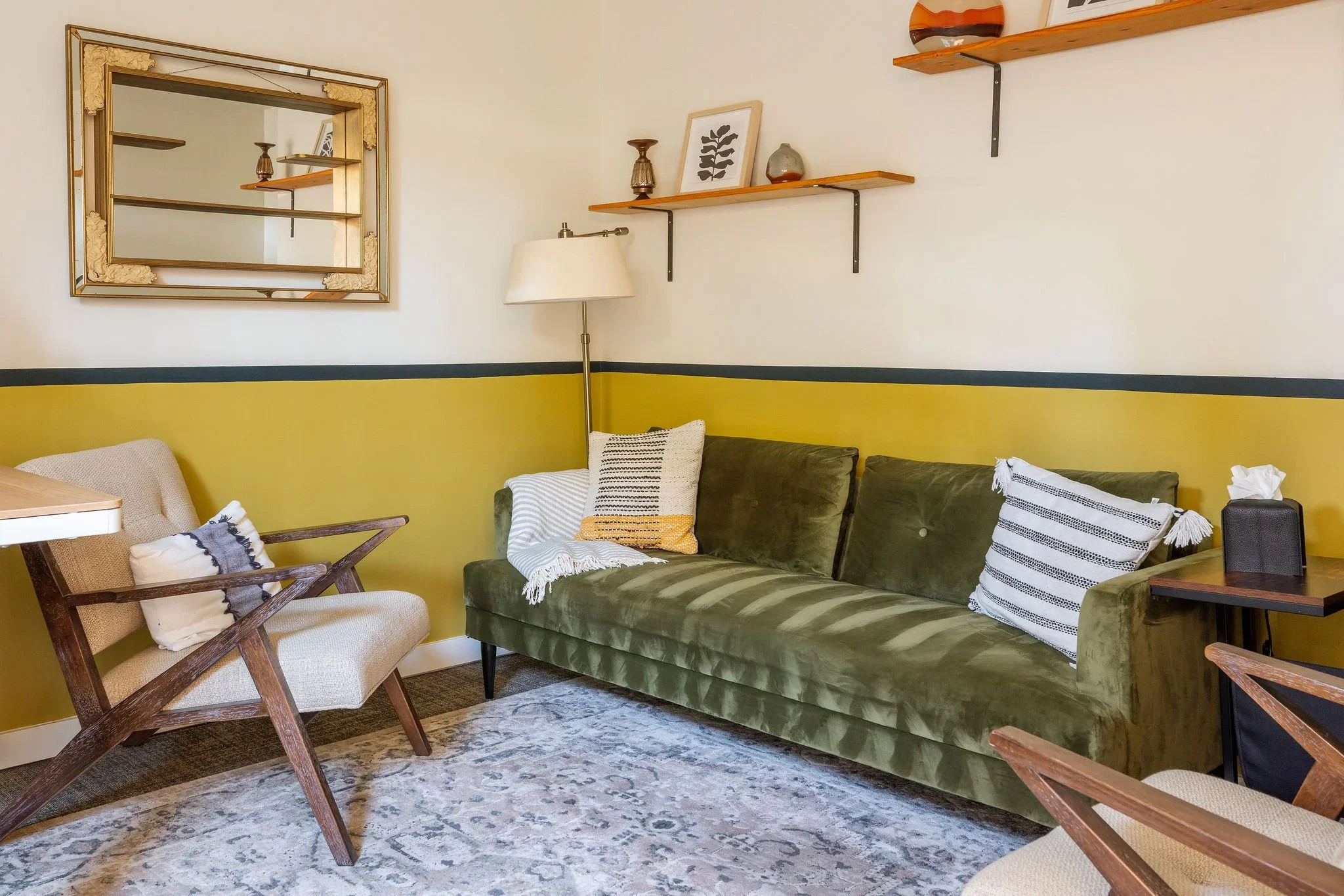
The best modern spaces have warmth + depth, not just simplicity.
Three elements do most of the work:
Texture layering: one smooth surface + one tactile surface + one softening element (rug, acoustic paneling, textile).
Lighting design: modern spaces can fall flat without layered lighting—ambient + task + accent.
Nature cues: greenery, natural light, and flow that reduces stress and supports focus.
How do you keep modern from feeling sterile in an office?
A quick tradeoff guide -
I recommend: warm neutrals, grounded contrast, and durable materials that patina gracefully.
I avoid: overly stark palettes, glossy finishes in high-traffic zones, and “statement pieces” that interrupt function.
Modern should feel easy to be in—especially for a team space.
A simple “Modern Fit” framework (use this before you hire)
If you’re aiming for modern, ask yourself:
Work modes: Do we need more focus zones, more collaboration zones, or both?
Brand feel: Should the space read calm and understated—or bold and high contrast?
Maintenance reality: What needs to be wipeable, scuff-resistant, and replaceable?
Client experience: Where do first impressions happen—and what should they communicate?
Decision style: Do we want to co-create quickly with a clear process, or iterate slowly?
If you want help translating “modern” into a clear plan for your space, book a design consult. (We’ll define your modern, then map it to layout + materials + budget.)
What’s Portland-specific about modern office design?
Two realities matter here:
PNW light: gray-season days can make “modern” feel colder—lighting warmth and material tone matter.
Lead times: if you’re remodeling around operations, procurement planning is part of the design—not an afterthought.

What should I ask a modern interior designer before hiring?
“How do you define modern—what principles guide your decisions?”
“How do you prevent modern from feeling sterile?”
“How do you design for durability in high-traffic areas?”
“What’s your process for layout + flow?”
“How do you manage procurement and timelines?”
If you’re considering a remodel and want modern to feel warm, functional, and durable, book a complimentary design consult and we’ll clarify direction, priorities, and next steps.