Biophilic Design at Home (and at Work): What It Actually Means
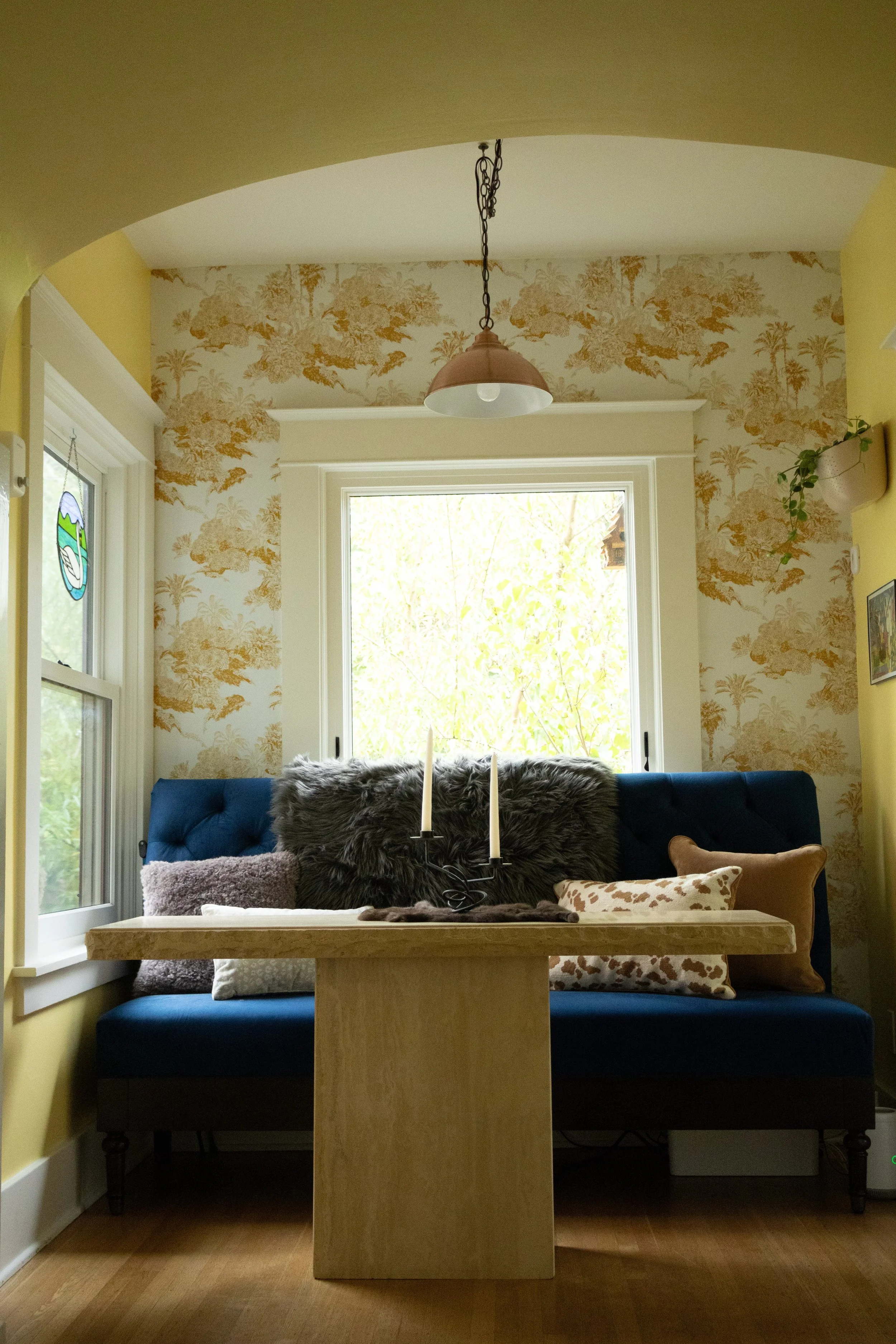
There's a good chance you've walked into a space and felt immediately at ease without knowing why..
Good light. Something green in the corner. A window with a view of trees.
You sat down and without really deciding to, took a slow breath.
That's not an accident. And it doesn't require a designer to manufacture it, but understanding why it works helps you create more of it on purpose.
Biophilic design is the practice of bringing natural elements, patterns, and qualities into the spaces we live and work in. The word itself comes from "biophilia" the idea, rooted in evolutionary biology, that humans have an innate need to connect with the natural world. We didn't evolve in offices. Or under fluorescent lights. Or surrounded by hard, flat, acoustically live surfaces.
Our nervous systems still carry the imprint of a very different environment.
Still, you probably think it's just plants, right?
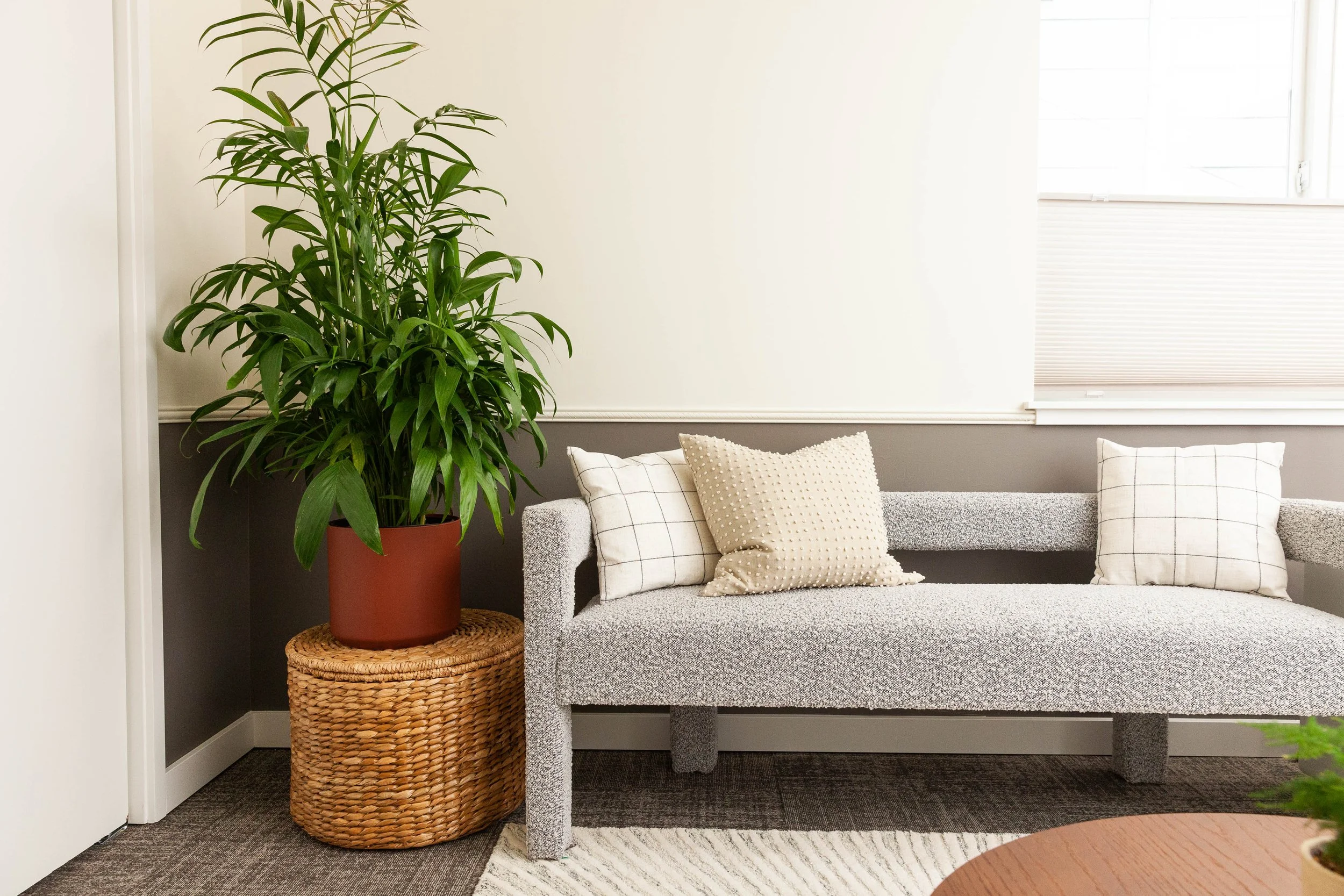
Sprout Therapy
Plants are part of it, but only a small part.
Biophilic design is less about adding green things to a room and more about understanding the underlying qualities that make natural environments feel restorative.
Think about the last time you were genuinely comfortable outside. What made it feel that way? Probably a combination of things:
Light that shifted and varied rather than stayed flat and constant
Some sense of shelter or enclosure: a canopy, a hillside, a covered porch
Visual complexity that was interesting without being overwhelming
Sound that moved or changed: wind, water, birds (rather than a steady hum)
Texture you could see and feel
A view that gave your eyes somewhere to rest
None of that requires a garden inside your home. It requires intention.
"The goal isn't to replicate nature inside a room. It's to recreate the qualities that make natural environments easy to be in."
What it actually looks like in a real room
In a home, biophilic design might show up as:
Positioning furniture around the best natural light source rather than around the TV
Choosing materials with variation: wood grain, linen, stone (instead of perfectly uniform surfaces)
Designing rooms with a sense of prospect and refuge: a clear sightline and a corner or alcove where your back is protected
Using color drawn from natural palettes (not necessarily green, but grounded, muted, layered)
Bringing in sound softening through textiles rather than letting acoustics bounce off hard surfaces
Plants can reinforce all of this. But a room with one thoughtfully placed plant, good natural light, and honest materials will feel more alive than a room packed with greenery under a flat LED ceiling.
What about Commercial Spaces?
It matters even more when people are paying to be there.
The research is consistent: people think more clearly, recover faster, stay longer, and perform better in environments that incorporate natural elements and patterns. That matters differently depending on the space.
In offices
Teams focus better when they have access to daylight, natural views, and some visual complexity. Decision fatigue sets in earlier in spaces that are visually monotonous. Acoustics often overlooked entirely affect concentration more than most people realize. A soft ceiling, layered textiles, and a few sound-absorbing materials can change how a workday feels by 2pm.
In therapy and wellness spaces
Clients settle faster when the room doesn't create visual or sensory noise. The nervous system is already doing a lot of work. A space that offers warmth, enclosure, and a connection to something natural, even something as simple as a view of the sky or a wood ceiling, reduces the ambient friction before a word has been said.
In restaurants and retail
People stay longer and spend more time (and more money) in spaces they feel good in. Natural light, materials that change with the hour and the season, acoustic comfort, and a sense of being in a place rather than a transaction - all of it contributes to that feeling without customers ever naming it.
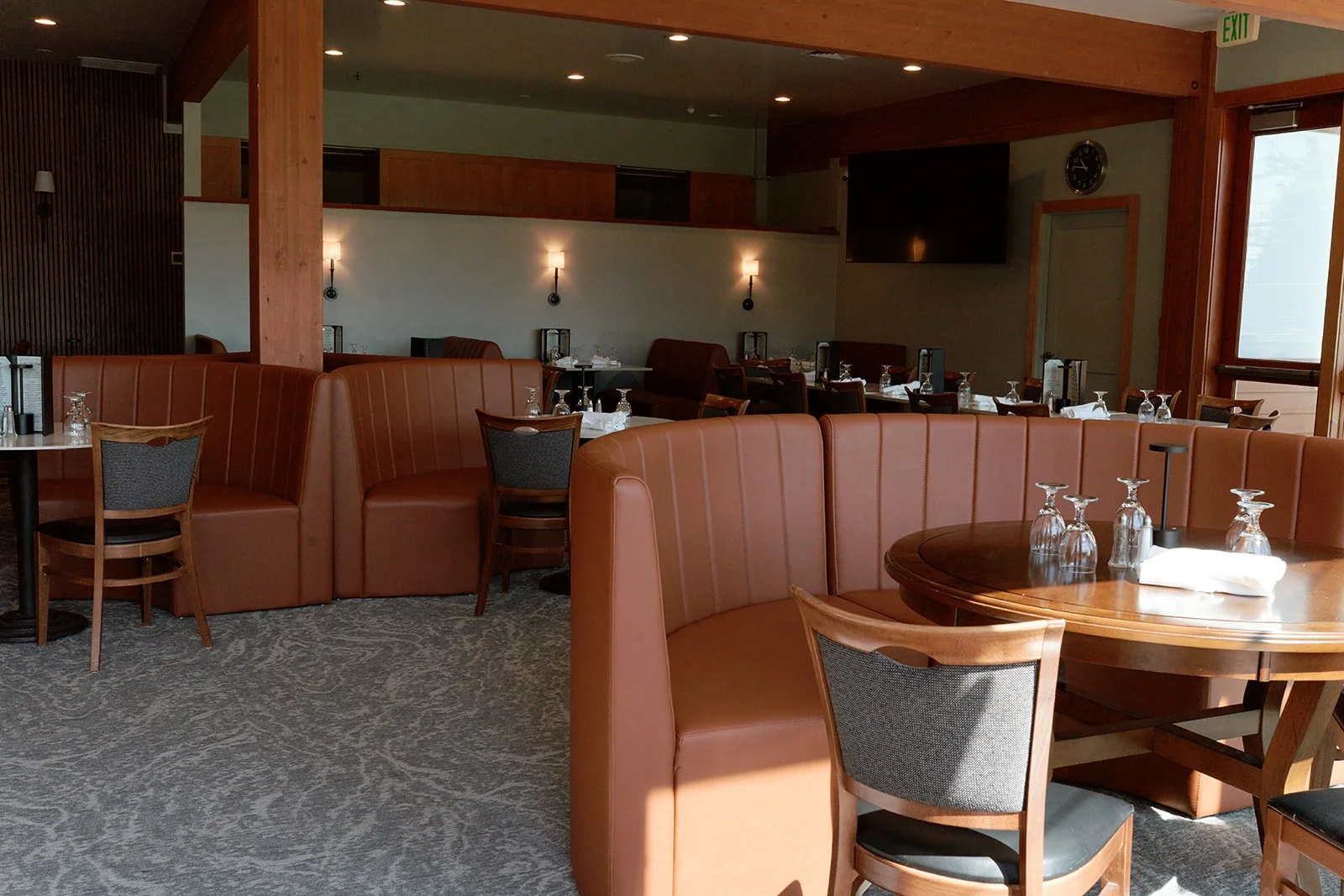
Persimmons Grille
The word is trending. The idea is ancient.
But is it just trending??
Humans have always built with daylight in mind,
oriented windows toward views,
used wood and stone and water as design anchors,
created rooms that felt sheltered without feeling trapped.
These aren't new ideas. They're intuitive ones that got crowded out by cheap materials, fast construction timelines, and the assumption that more artificial control was better than working with what's natural.
What's changed is that we now have language and research to explain why spaces feel the way they do. That's useful. It means conversations about lighting, materials, and layout don't have to rely on taste or intuition alone there's something concrete underneath them.
The trend will pass. The principles will stay relevant for the same reason they always have been: because they're based on how people actually function, not on what's fashionable.
If you don't know where to begin, start here:
If you're looking at your home or your business and wondering whether your space is working against you, here are a few places to look:
Light first Where does natural light come from? And what time of day does it reach the spaces where you spend the most time? Even small adjustments to furniture placement or window treatments can shift this significantly.
Materials second Are most of the surfaces in your space uniform, hard, and smooth? A few elements with real texture: wood, linen, stone, rattan go a long way toward making a room feel less like a container.
Acoustics third If the room echoes or feels loud, that's information. Sound is part of how a space registers emotionally, and it's often the last thing people think about.
Then plants Once the fundamentals are working, plants reinforce what's already there. They're a lovely layer, not a fix. And honestly, one plant in the right spot beats a shelf full of them every single time.
You don't need to overhaul anything. Most of the time, it's a matter of paying attention to what your space is already doing and making small decisions that work with it rather than against it.
That's really what this comes down to. Not a style or new trend. Just an honest look at how the places you inhabit affect the way you think, feel and move through your day!
If you're not sure why your space feels off or you're starting something new and want to get it right from the beginning, we're happy to take a look. We work with homeowners, business owners, and developers across the Pacific Northwest