Planning a kitchen remodel in Portland? The decisions that determine whether it works happen long before demolition starts.
Most kitchen remodels in Portland start the same way: someone gets tired of the layout, or the cabinets, or the fact that the light is wrong at every hour of the day, so they:
start gathering contractor bids
pick finishes from a showroom or Pinterest board
set a budget based on whatever the first bid comes back at
And then, somewhere around week three of construction, they realize the thing they actually needed to figure out first is now impossible to change without pulling everything back out. This isn't a contractor problem, it's a sequencing problem, and it's almost entirely avoidable.
The contractor is not the first call.
This is the part nobody tells you, possibly because most of the people writing about kitchen remodels are contractors. A contractor's job is to build what you've decided, and a designer's job is to figure out what you should decide and in what order. Those are different jobs, and conflating them is where most remodels run into trouble. Before anyone picks up a tool, there are questions that need real answers:
Does the layout actually work for how you cook, or are you just used to it?
Where does natural light come from, and what time of day does it reach the spaces where you spend the most time?
Is the kitchen visually connected to the rest of the main floor, and do you want it to be?
What's the primary friction point right now: storage, flow, surface space, seating, or all of the above?
Are you optimizing for resale, for daily life, or for both, and do you know where those two things diverge?
These aren't questions a contractor needs answered to give you a bid. They're questions a designer needs answered to make sure the bid is for the right project.
"The most expensive kitchen remodel mistakes aren't material choices. They're layout decisions made too late to change."
What goes wrong when design comes second.
The island that's twelve inches too wide for the circulation path, the window that got walled over because nobody thought about where the upper cabinets were going, the peninsula that blocks natural light from the only south-facing wall in the house, the range hood that vents nowhere because the structural question was never asked. None of these are dramatic failures.. they're quiet ones, the kind you live with for fifteen years and can't quite explain to anyone who asks why the kitchen feels slightly off.
Portland homes compound this. Many of them are older bungalows and Craftsmans with kitchens that were never designed for how people actually cook and gather today. The footprint is often fine, but the layout frequently isn't, and a contractor working from a finishes list rather than a design brief will replicate the existing layout by default, because that's the path of least resistance and not because it's the right answer.
What to sort out before anything else:
The layout question
Walk through your kitchen during the hour you use it most and pay attention to where you stand, where everyone else ends up, and where things pile up that have no home. The layout that works is the one that accounts for those patterns, not the one that looks the most symmetrical in a floor plan. If two people can't cook at the same time without getting in each other's way, that's a layout problem and not a storage problem.
The light question
Natural light changes everything about how a kitchen feels and functions, and it's one of the first things to get lost in a remodel that prioritizes upper cabinet storage over window placement. Before you finalize anything, understand where your light comes from, what time of day it arrives, and what you'd be giving up if cabinetry or a new hood configuration blocked it. In the Pacific Northwest, where we spend months in genuinely low-light conditions, this matters more than most people factor into their planning.
The materials question
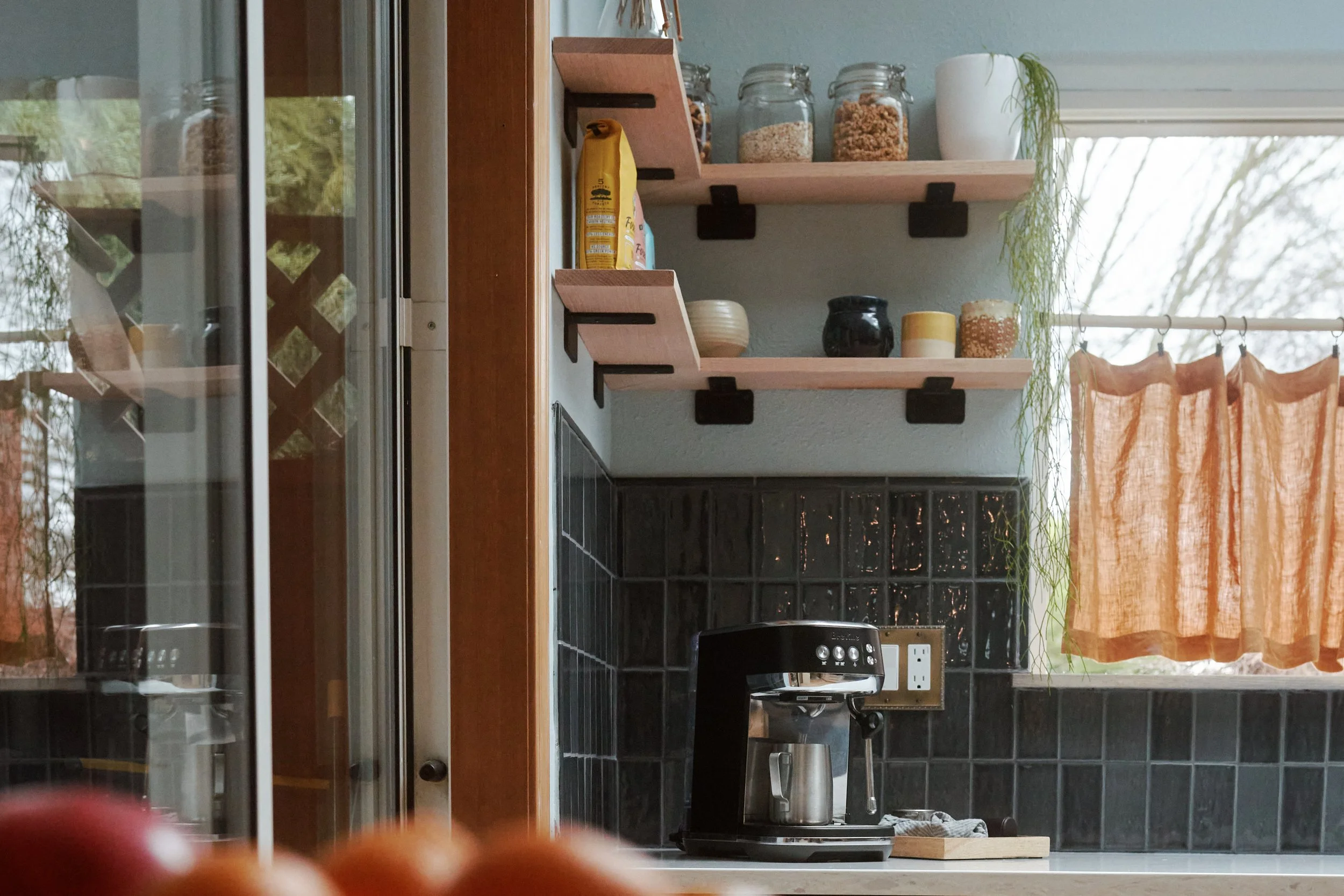
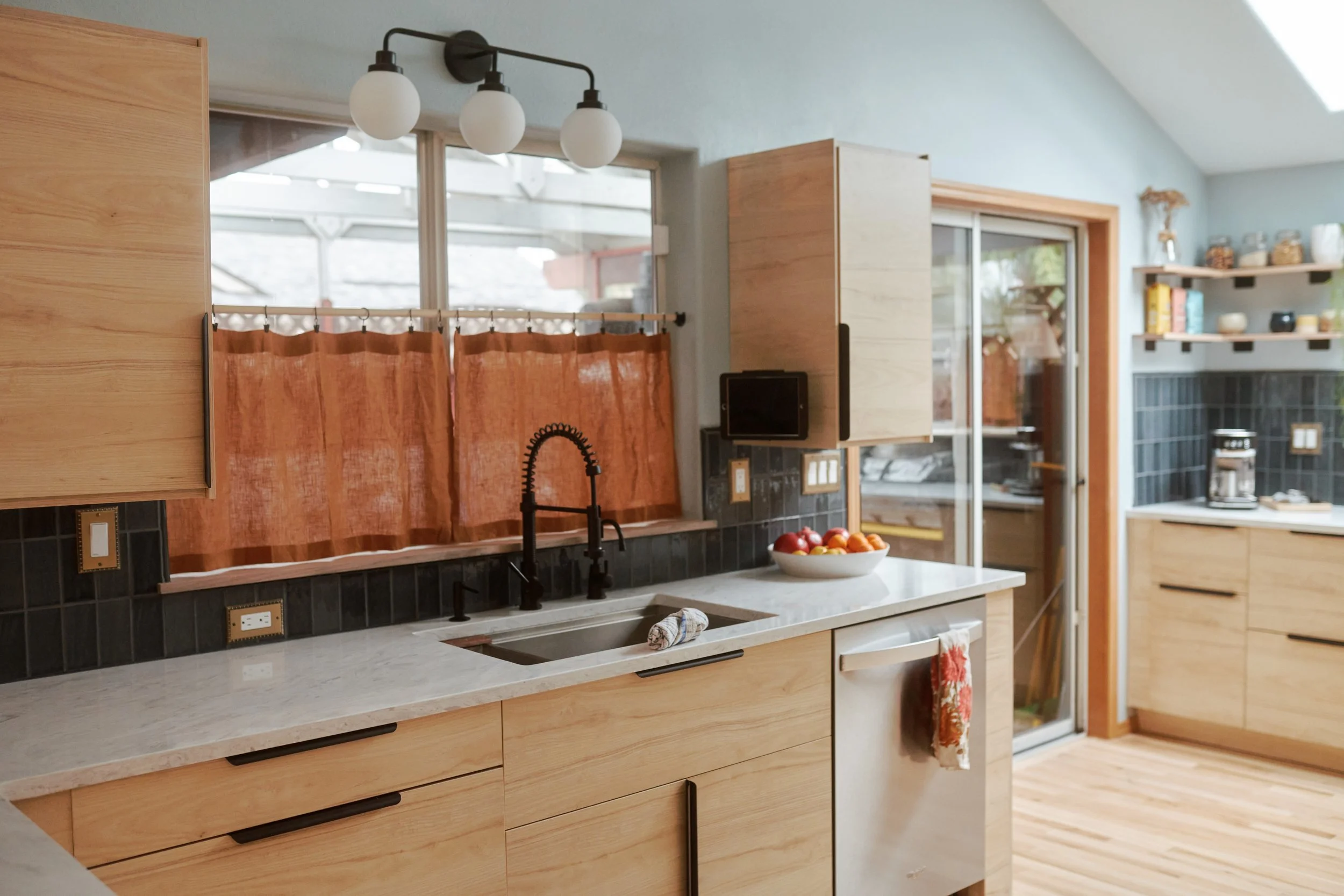
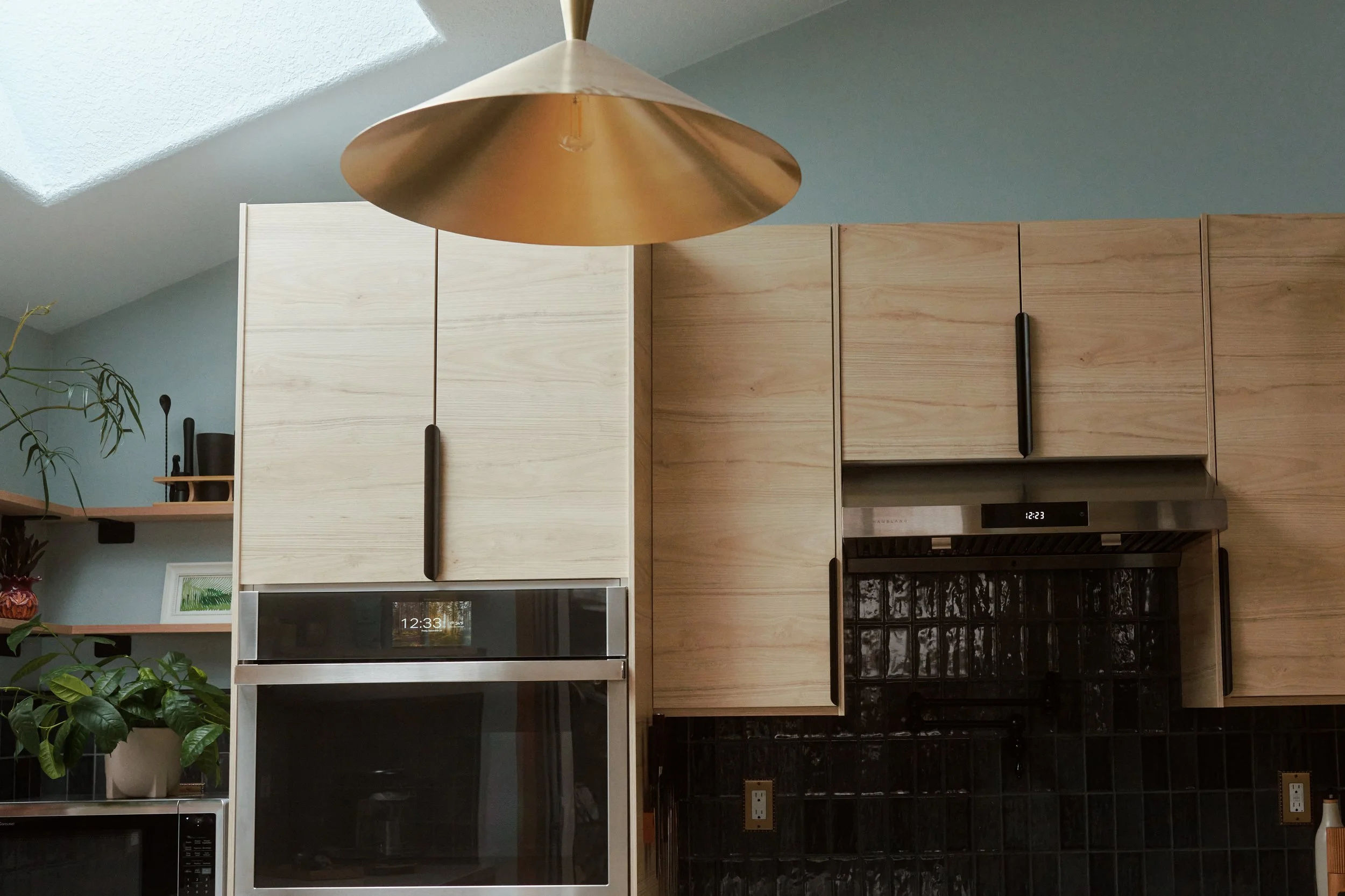
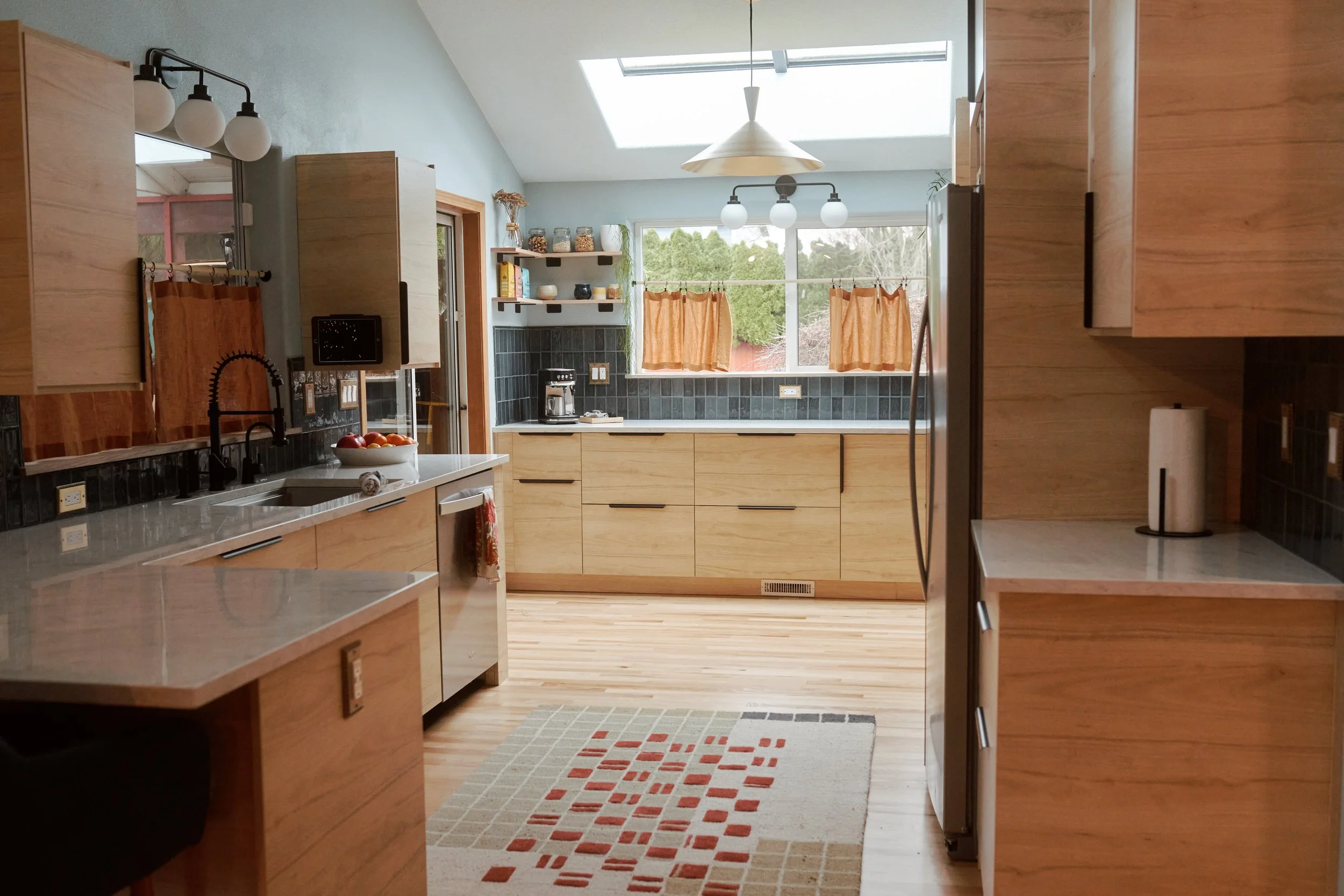
The all-white kitchen era is winding down in Portland, and for good reason: white shows everything, ages fast, and has no real relationship to the natural environment just outside the window. What's replacing it — warm wood tones, stone-inspired surfaces, earthy palettes — requires more thought, not less, because materials with variation and depth need to be chosen in relationship to each other and to the actual light in the room. Picking finishes from samples under a showroom's fluorescent lighting is one of the most reliable ways a remodel ends up feeling slightly off once it's done.
The sequence question
Design decisions have an order, and when they get made out of sequence, you end up retrofitting rather than designing. Layout comes before cabinetry, cabinetry comes before appliances, appliances come before countertops, and lighting comes before any of them because it affects everything else. That's where the "I wish we'd done this differently" moments come from — not from choosing the wrong tile, but from choosing the right tile for the wrong version of the room.
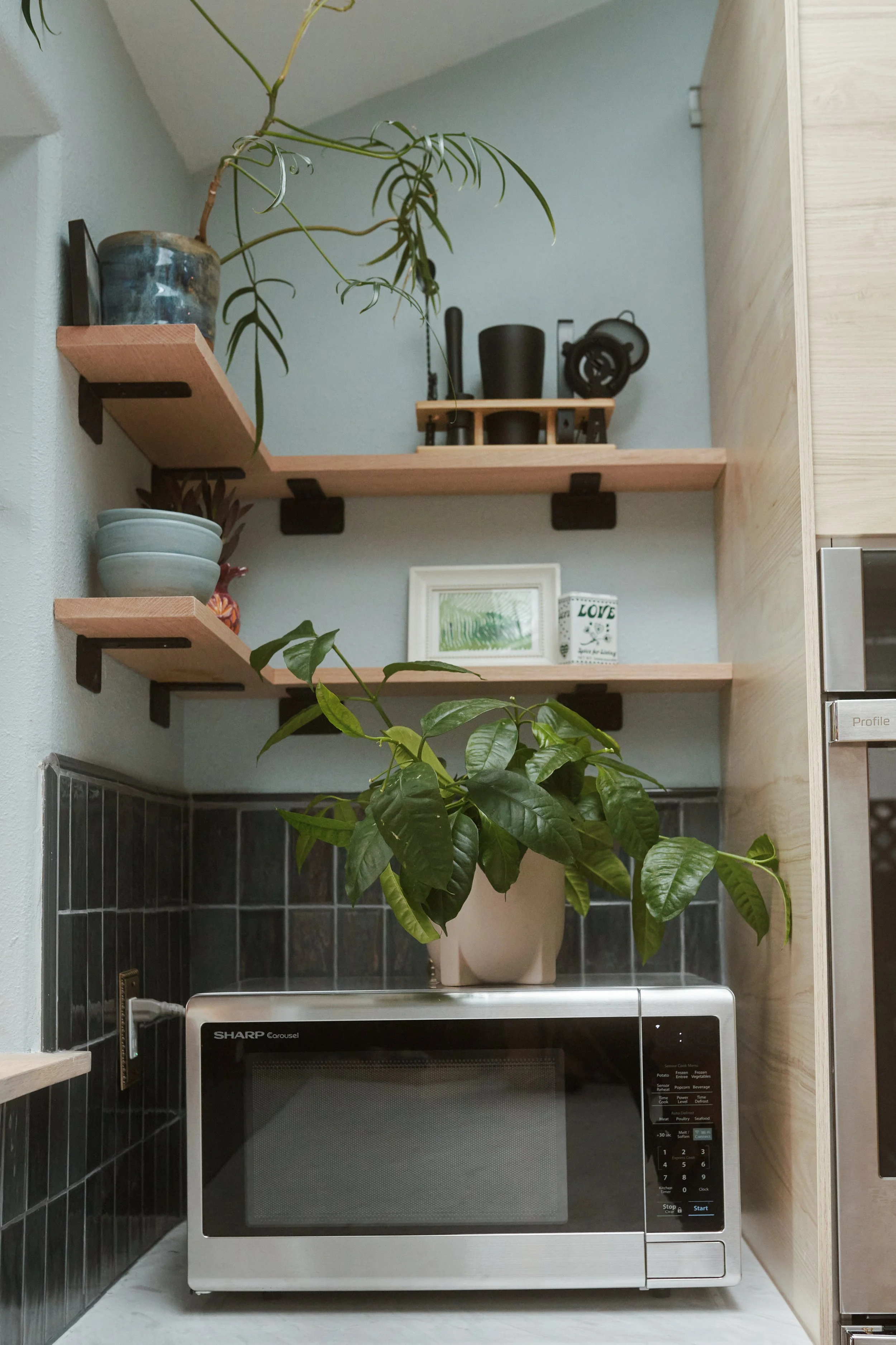
You probably don't need a full gut renovation.
Worth saying clearly, because the cost guides out there can make it feel like a kitchen remodel is an all-or-nothing proposition. Sometimes the layout is fine and the friction is entirely about materials and light, sometimes one wall change opens up a room that felt closed for years, and sometimes the problem is a peninsula that should be an island or an island that shouldn't exist at all. The scope of the project should follow the diagnosis and not precede it, and the diagnosis requires actually looking at how the space is being used and not just what it looks like.
That's the part that tends to get skipped when design comes second and it's the part that makes the difference between a kitchen that photographs well and a kitchen that actually works for the life you're living in it.
If you're planning a kitchen remodel in Portland and want to make sure the design decisions are sorted before construction begins, we can help you get there. We work with homeowners across the Pacific Northwest on new construction, remodels, and furnishing projects.