What Your Therapy Office Is Doing to Your Clients Before You Say a Word.
Your space is already doing clinical work. The question is whether it's working for you or against you.
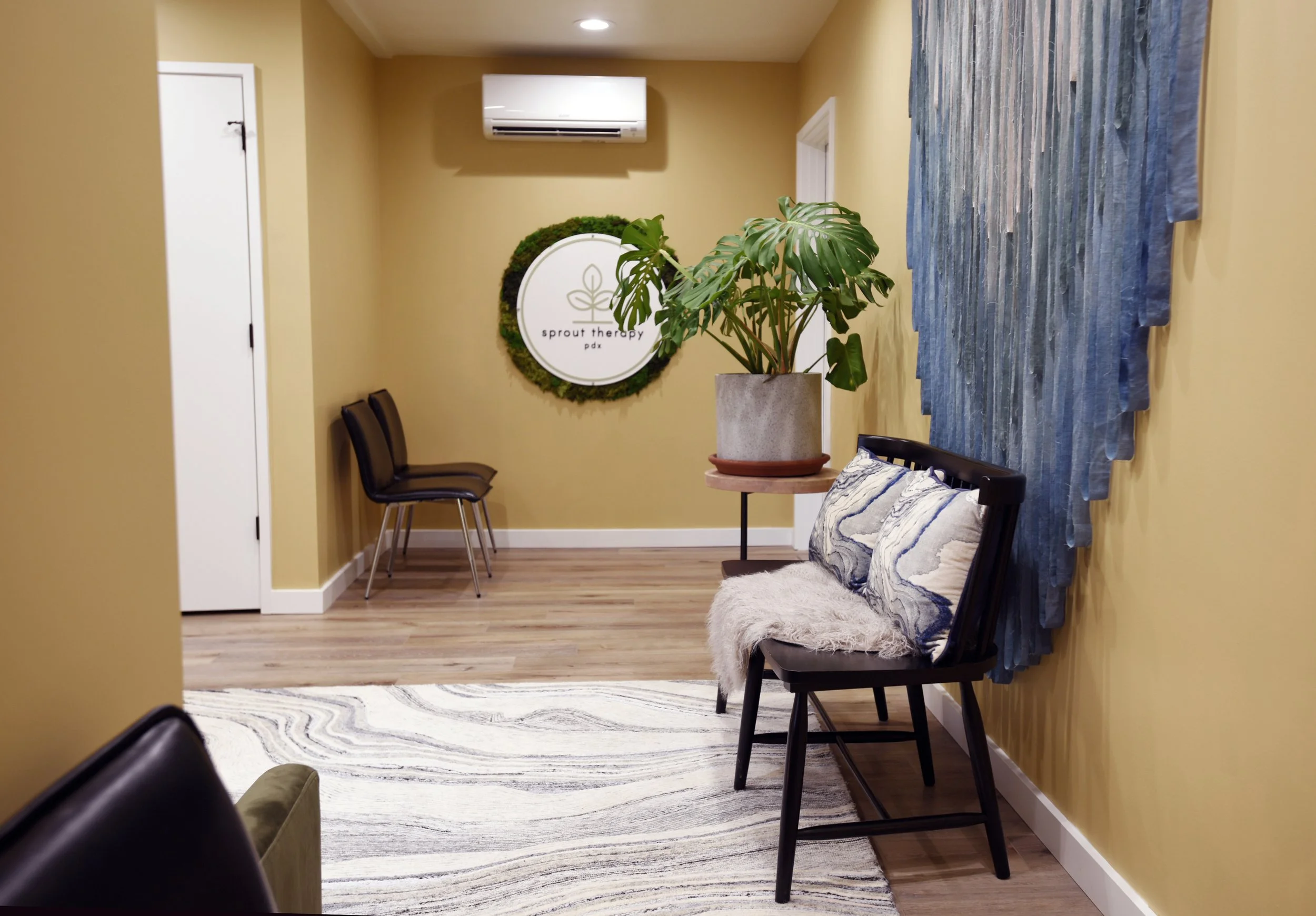
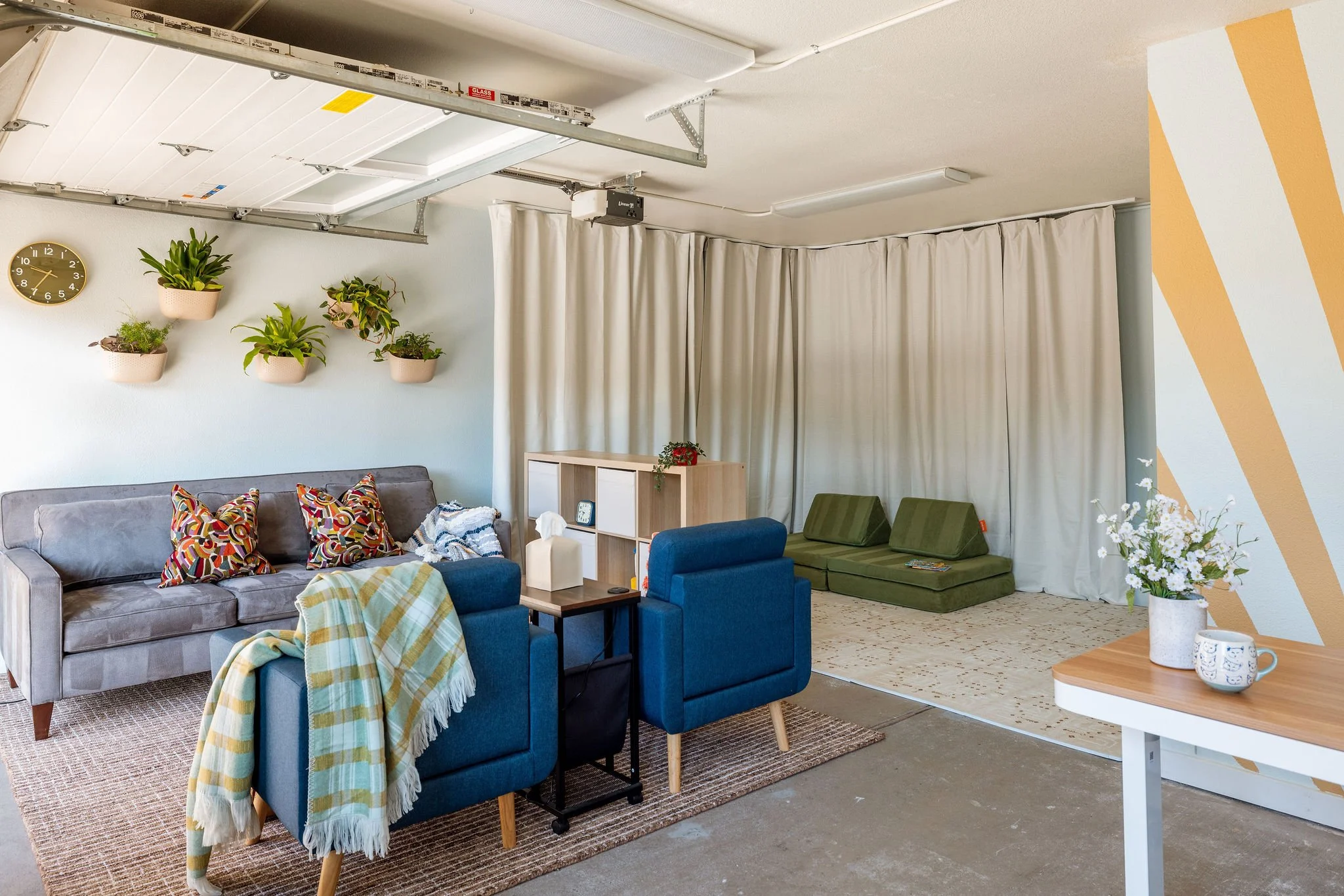
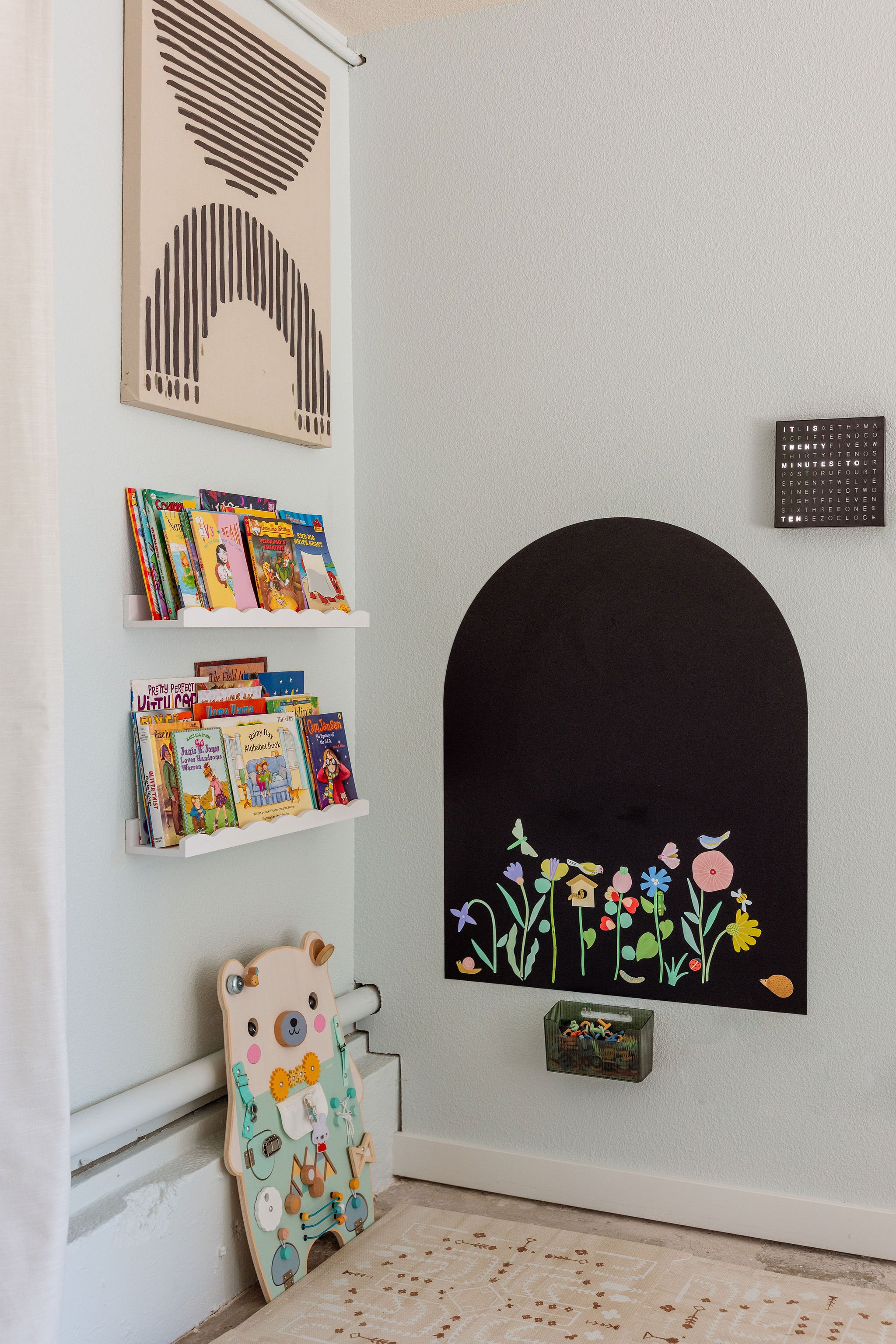
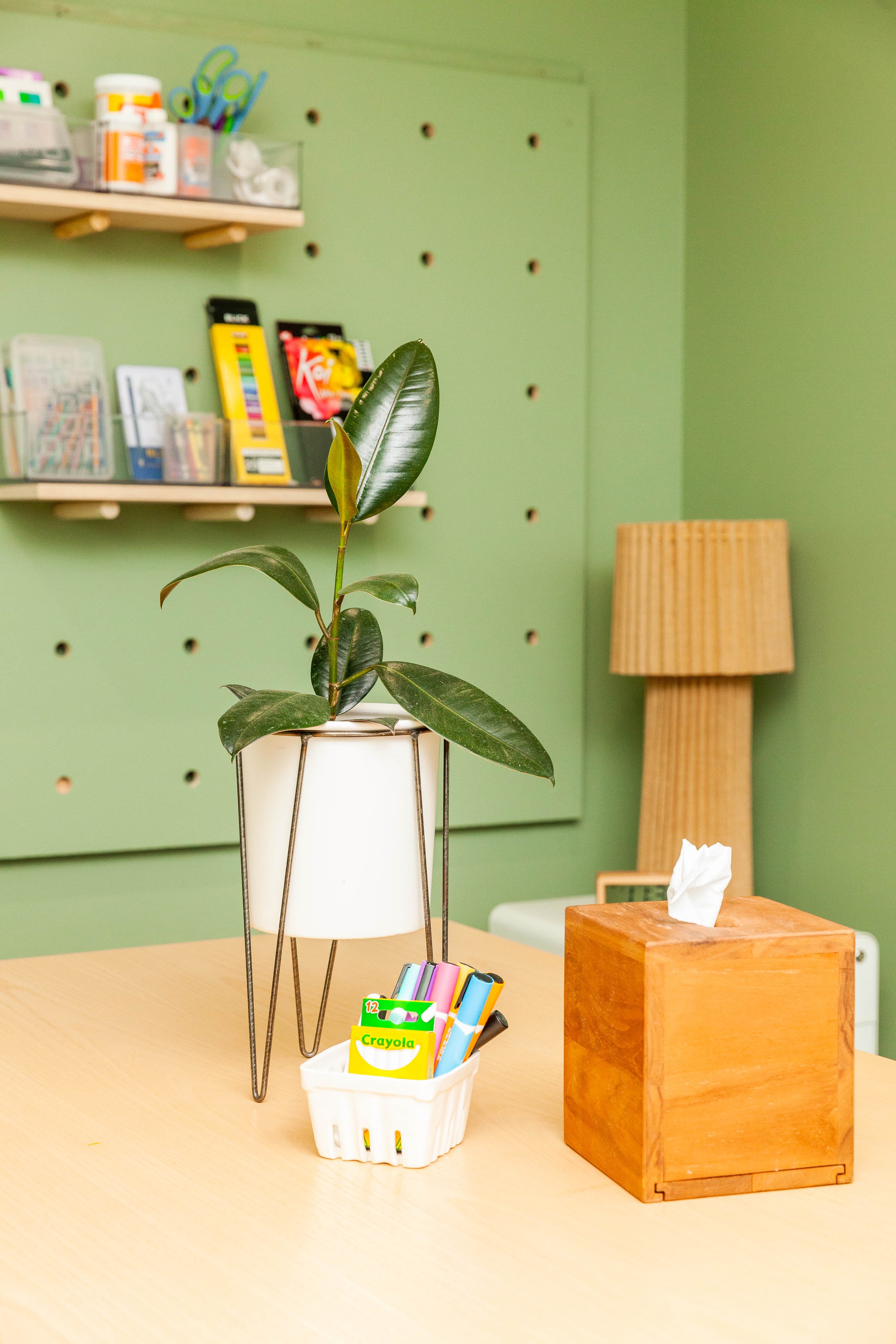
Sprout Therapy, PDX
Your clients arrive carrying something.
From the moment they walk through your door, their nervous system is reading the environment and deciding whether it's safe to put any of it down. Most therapy spaces are designed as if that moment doesn't exist and it costs more than most practitioners realize.
The waiting room gets leftover furniture and the session room gets the most attention but often for the wrong reasons. The result is a space that's working against the very thing you've spent years training to do.
What the waiting room is actually doing.
The waiting room is where anxiety peaks before a session and it's the most underdesigned space in almost every practice.
A few things that matter more than most people account for:
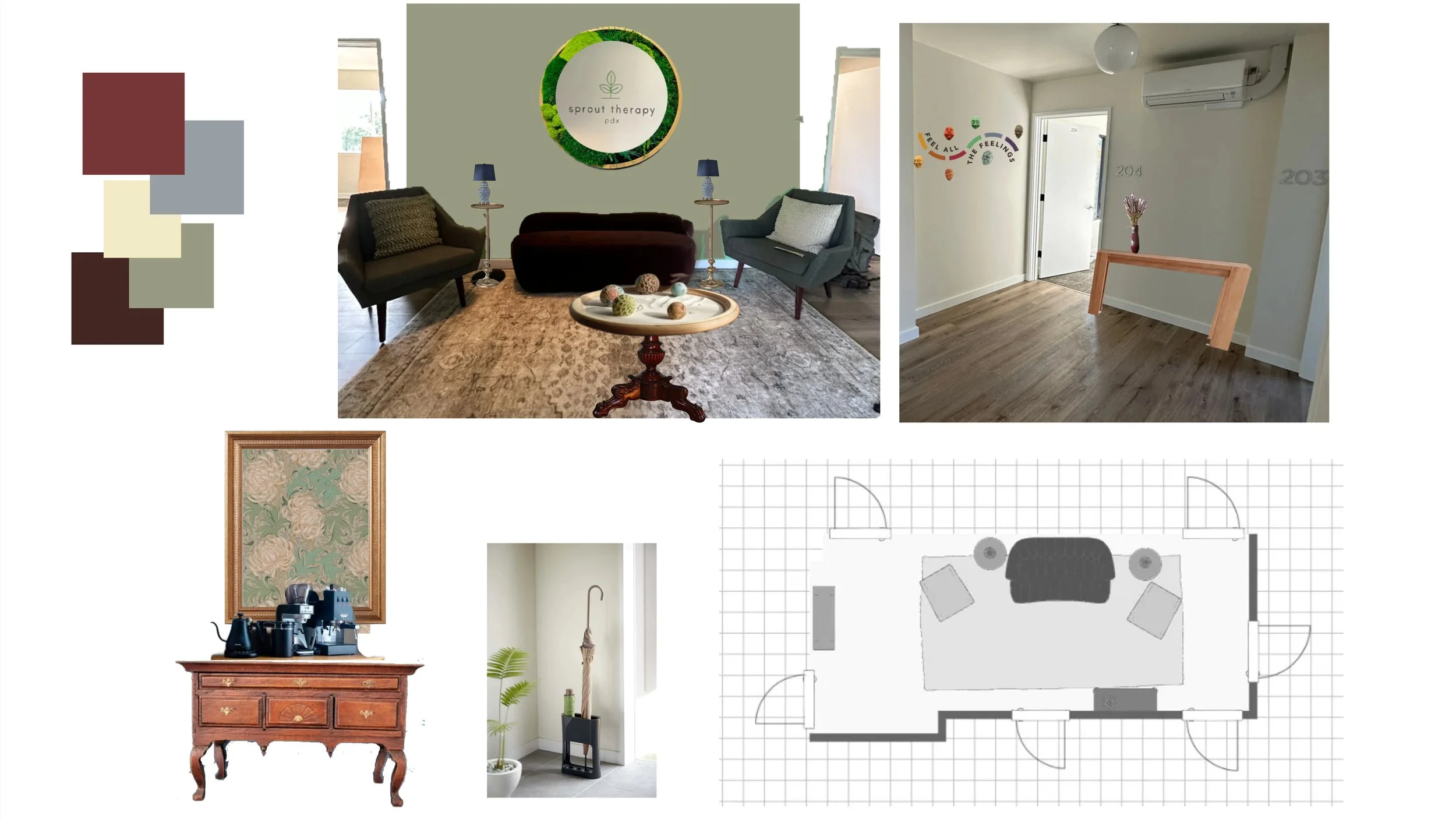
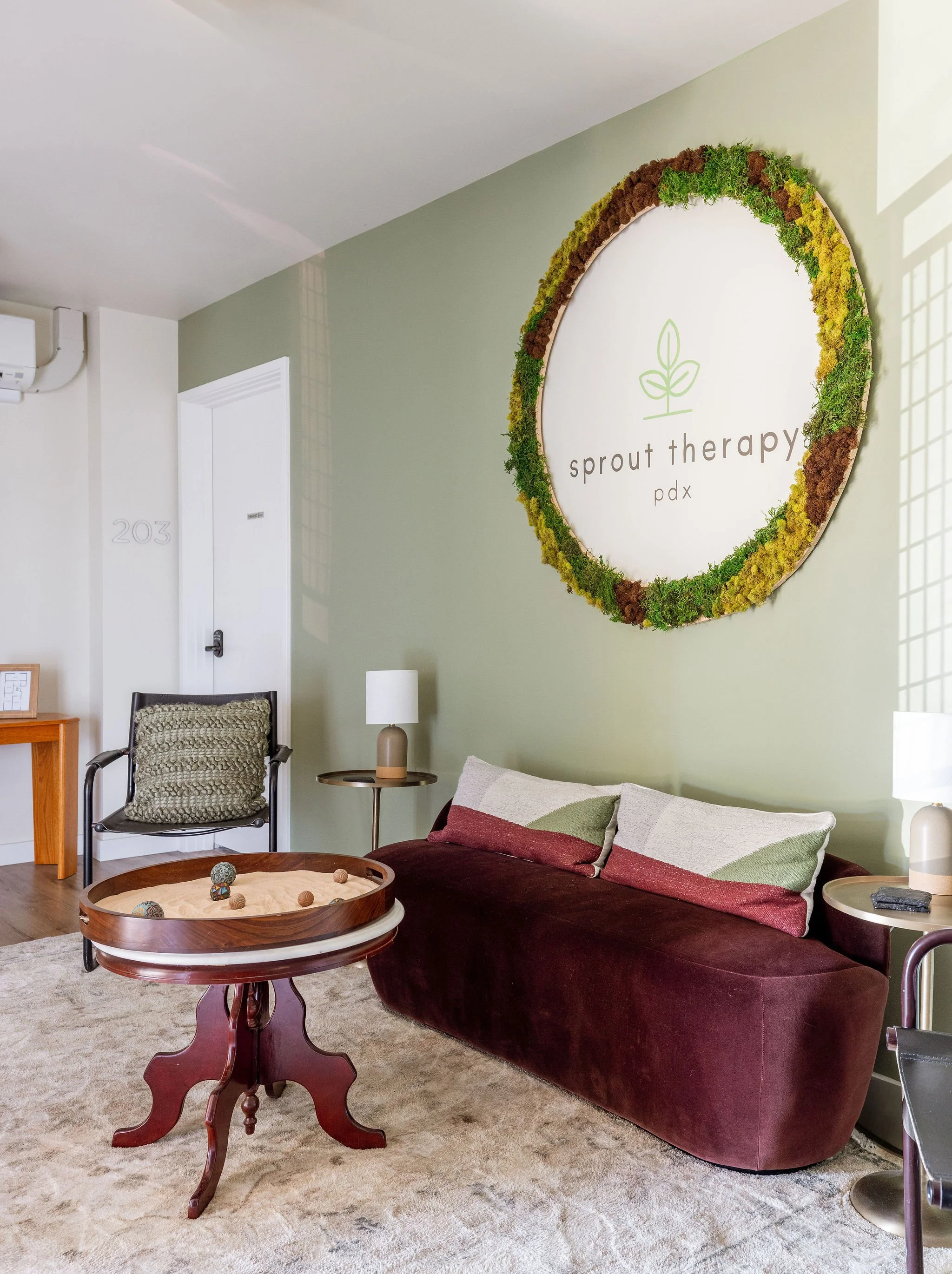
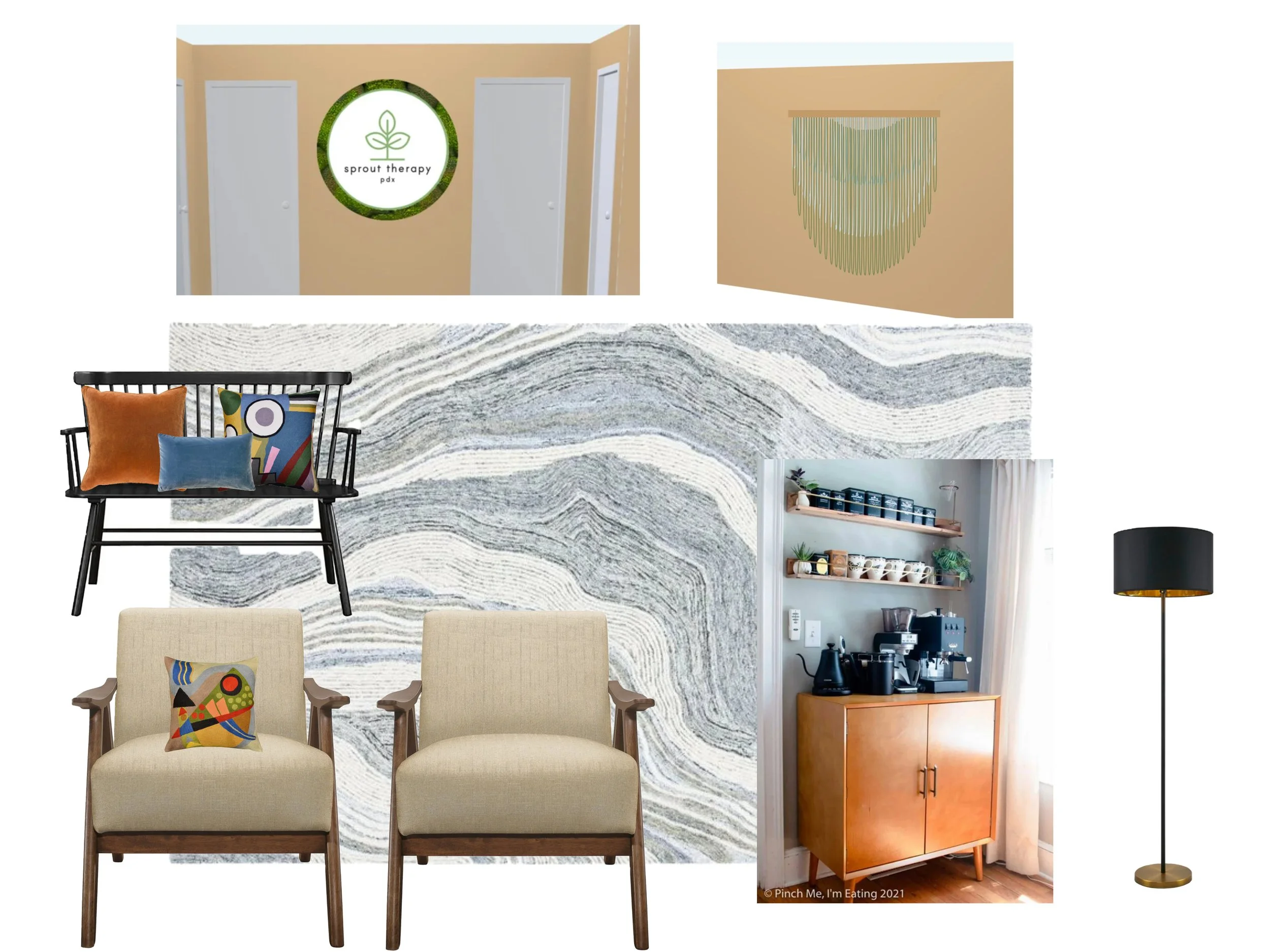
Seating arrangement. A client seated with their back to the door is a client whose nervous system will work harder for the entire session. Seating that offers a clear sightline to the exit signals safety before a word has been exchanged.
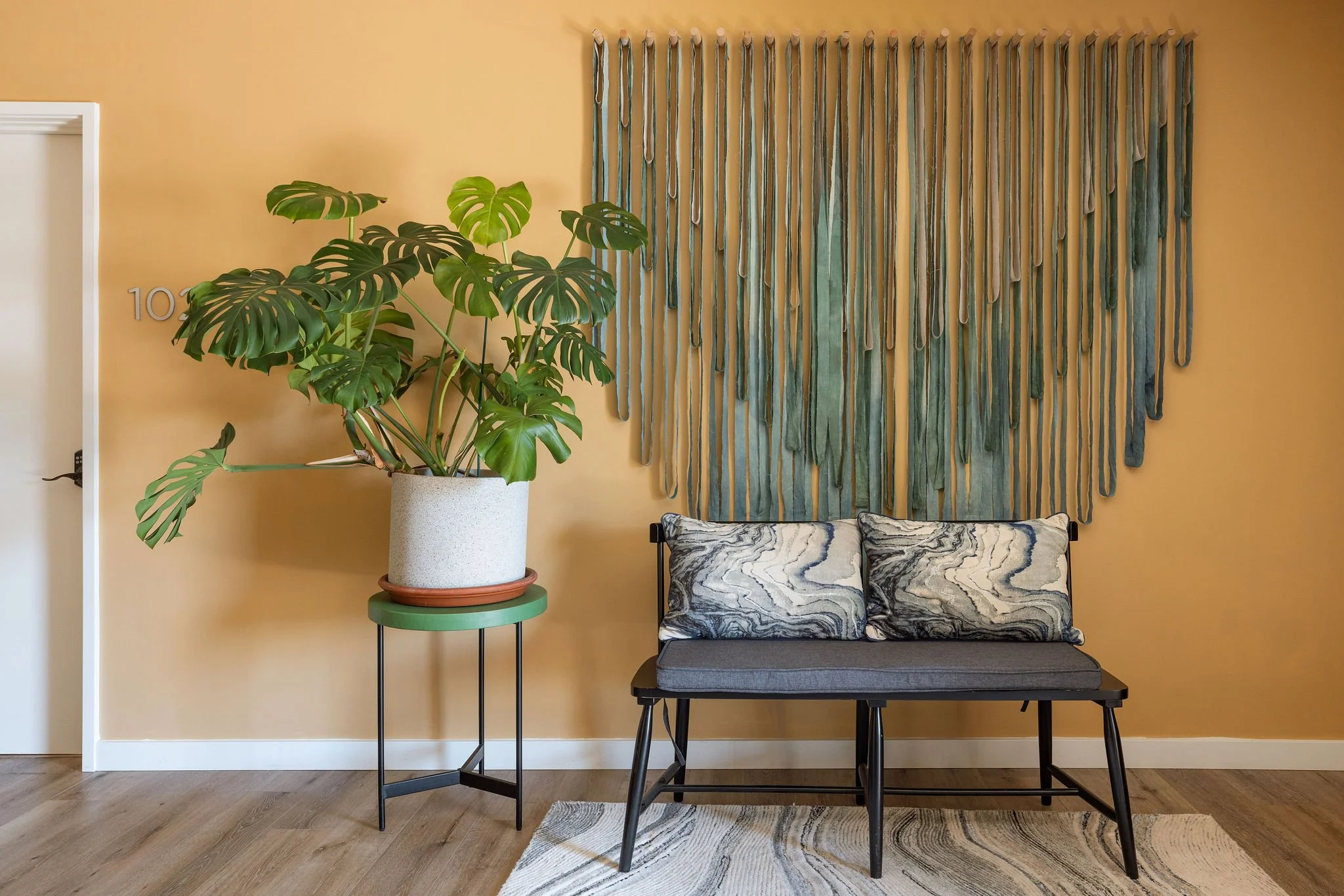
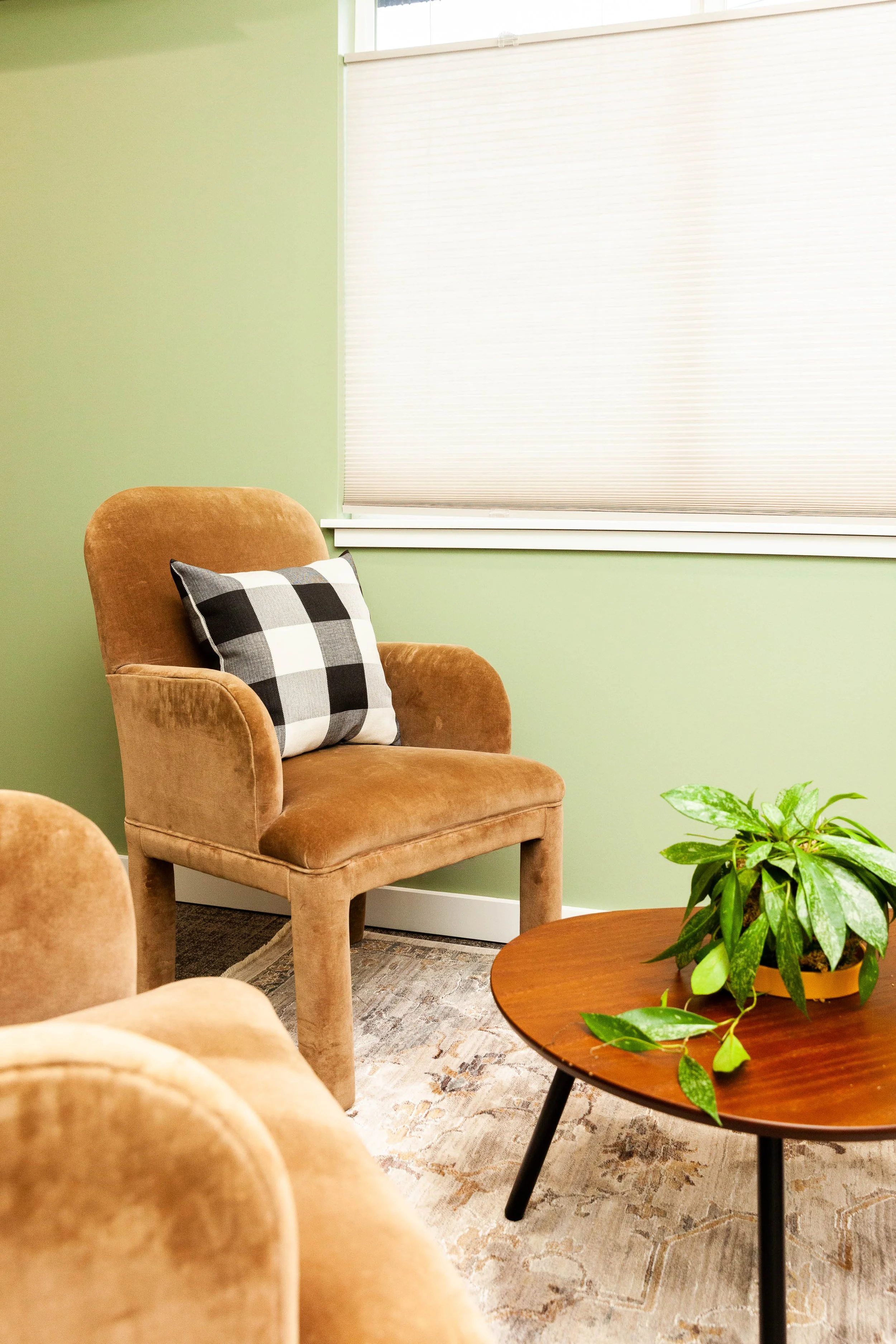
Lighting. Fluorescent overhead lighting keeps the nervous system on alert. Layered, warmer sources at eye level or below change the feeling of a waiting room more than almost any other single decision, especially in Portland, where natural light disappears for months at a time.
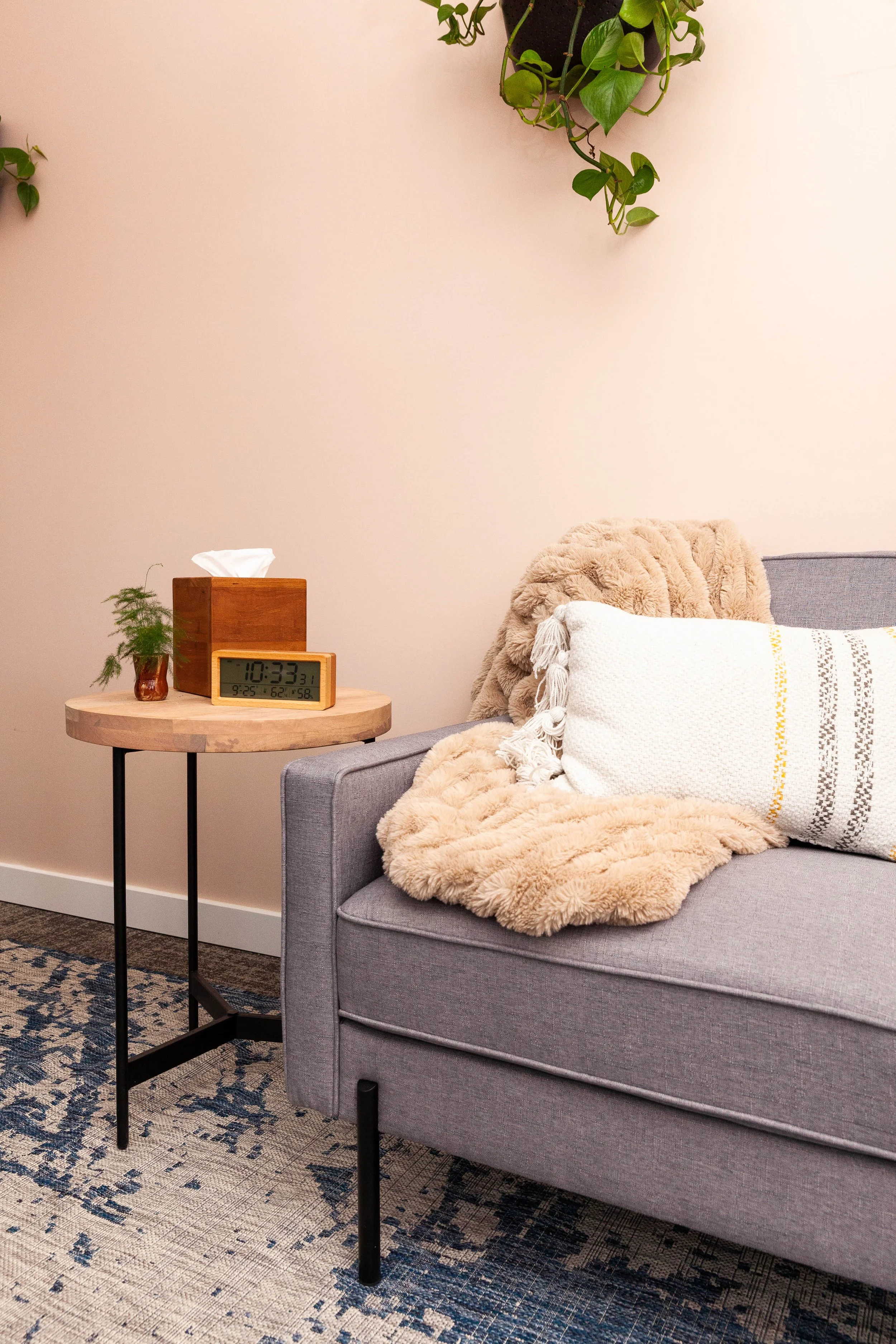
Sound. Hard floors and bare walls mean sound bounces and carries. Beyond the confidentiality concern, acoustic harshness keeps people alert in a way that works directly against what you're trying to create. Rugs, upholstered seating, and textile wall treatments aren't decorative in a therapy space, they're functional.
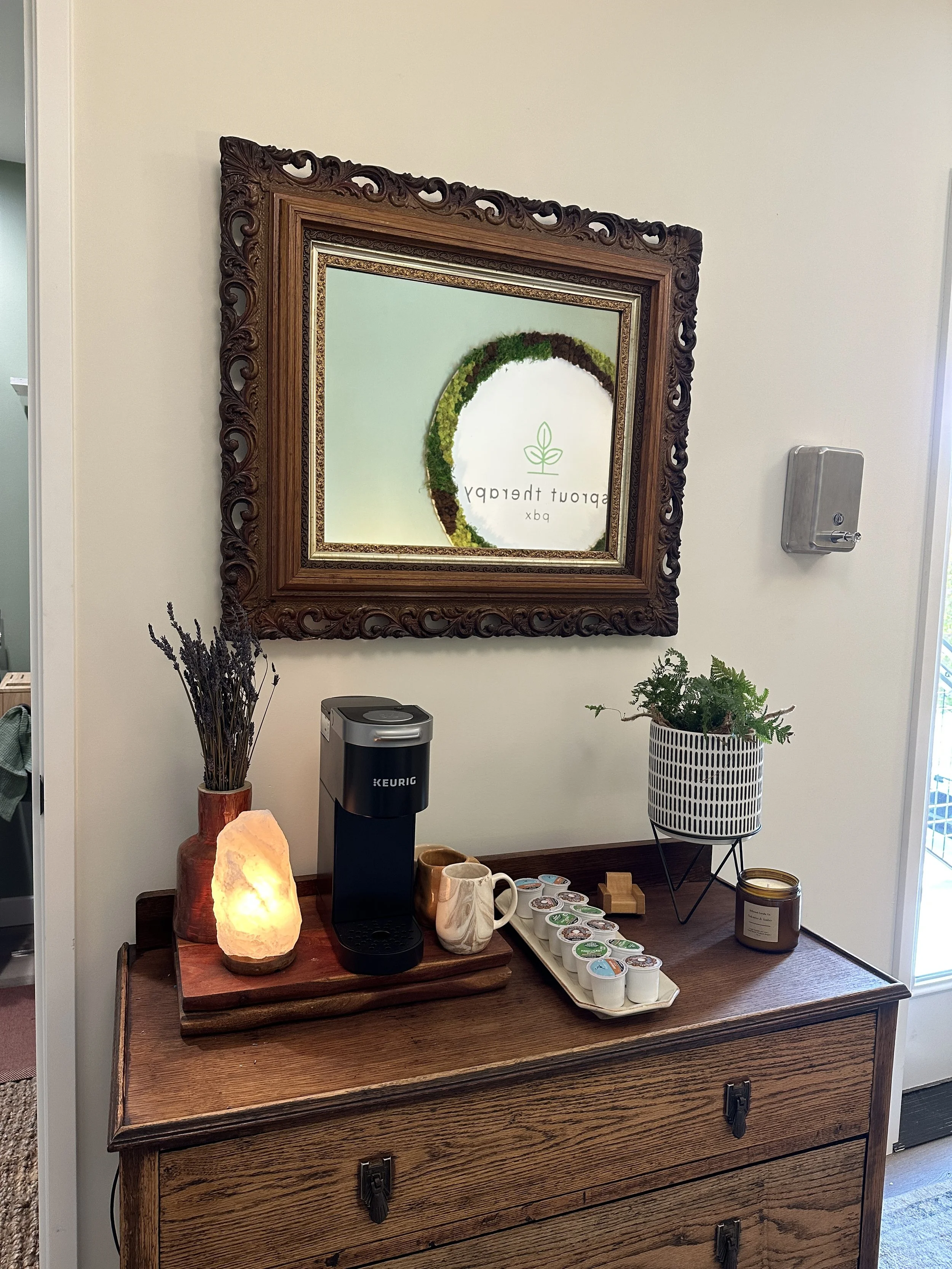
Visual noise. An overstuffed magazine rack, competing art, furniture pushed against every wall - a dysregulated nervous system has to work to filter all of that out. Calm isn't about sparse, it's about intentional.
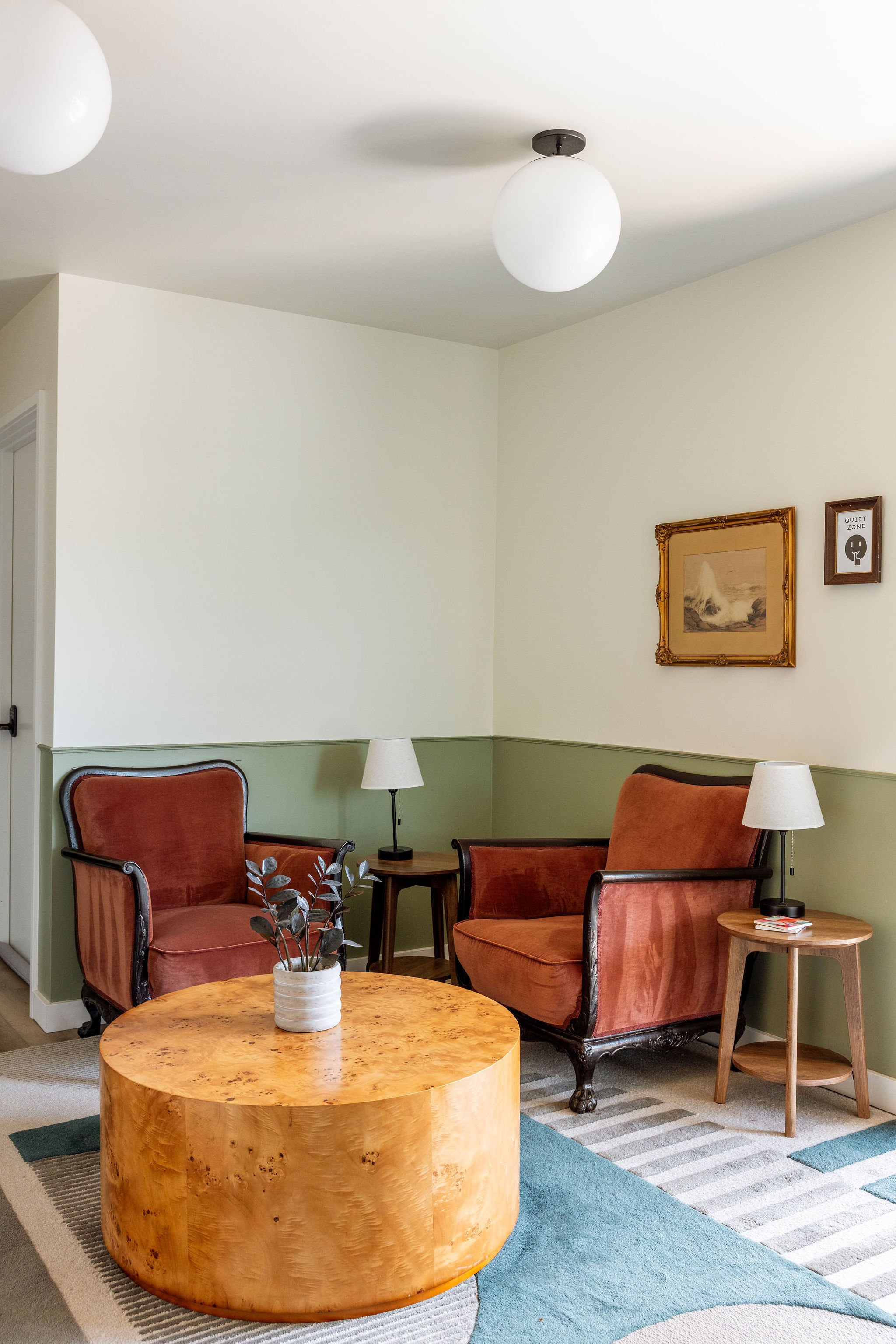
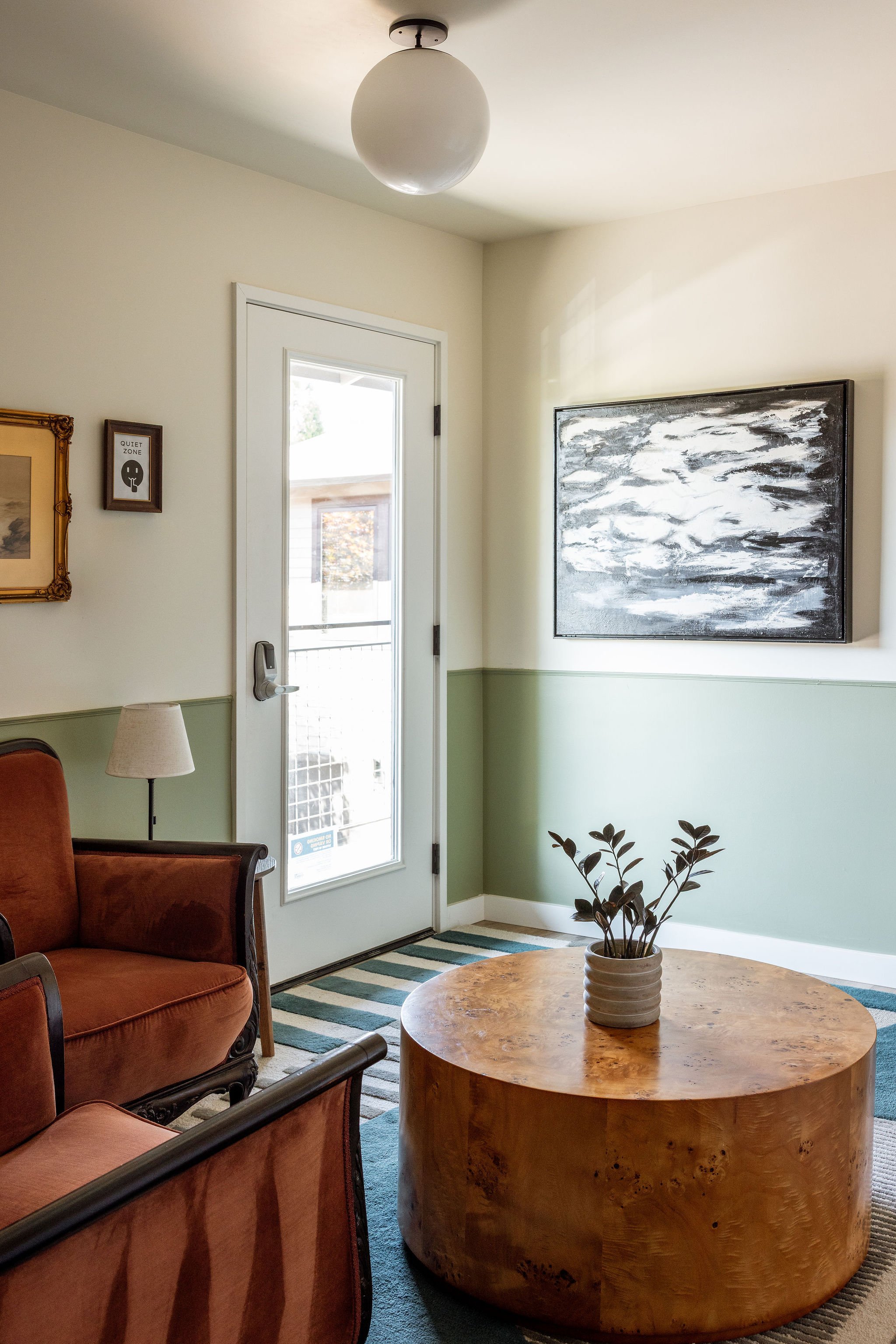
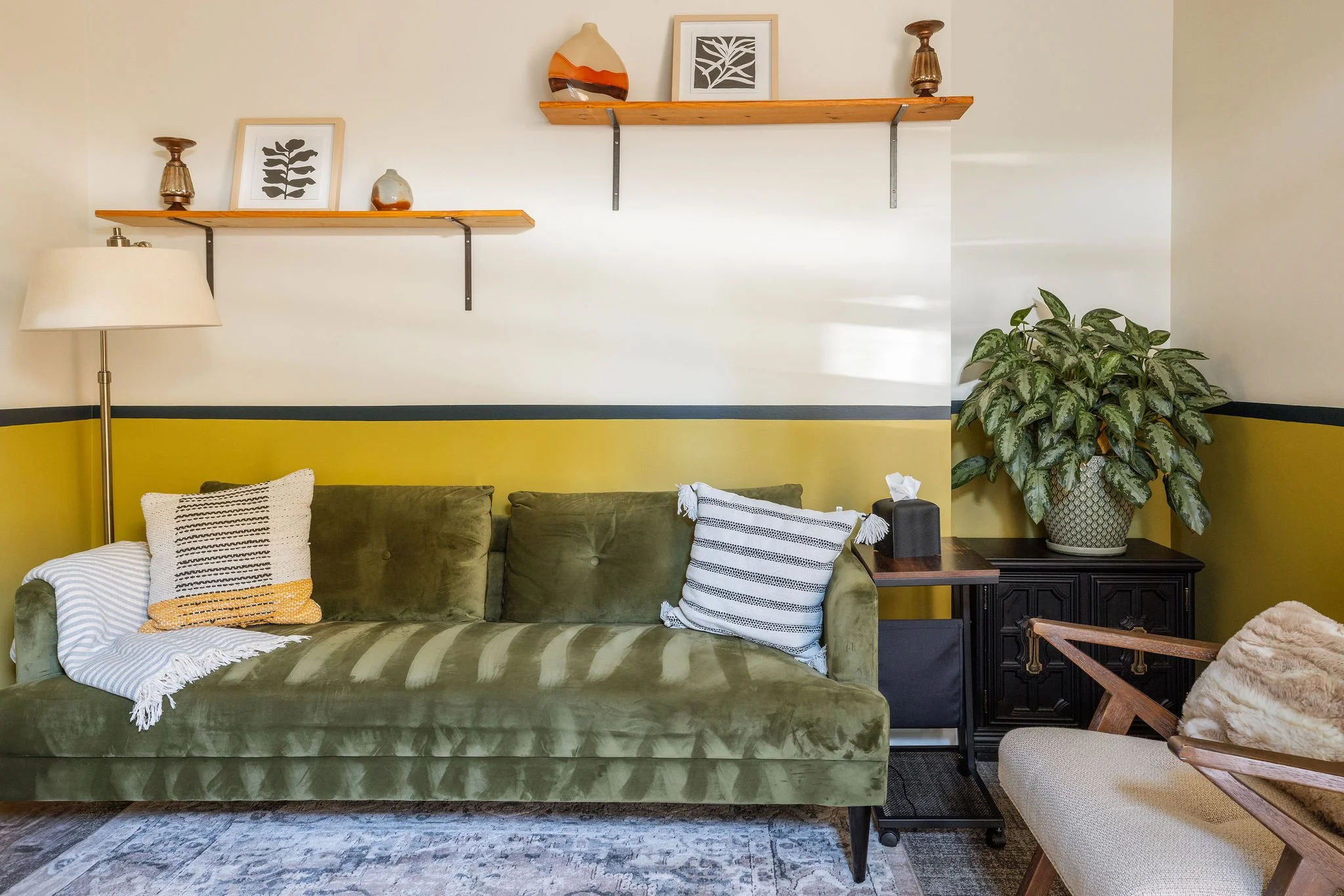
What the session room needs to do that most don't.
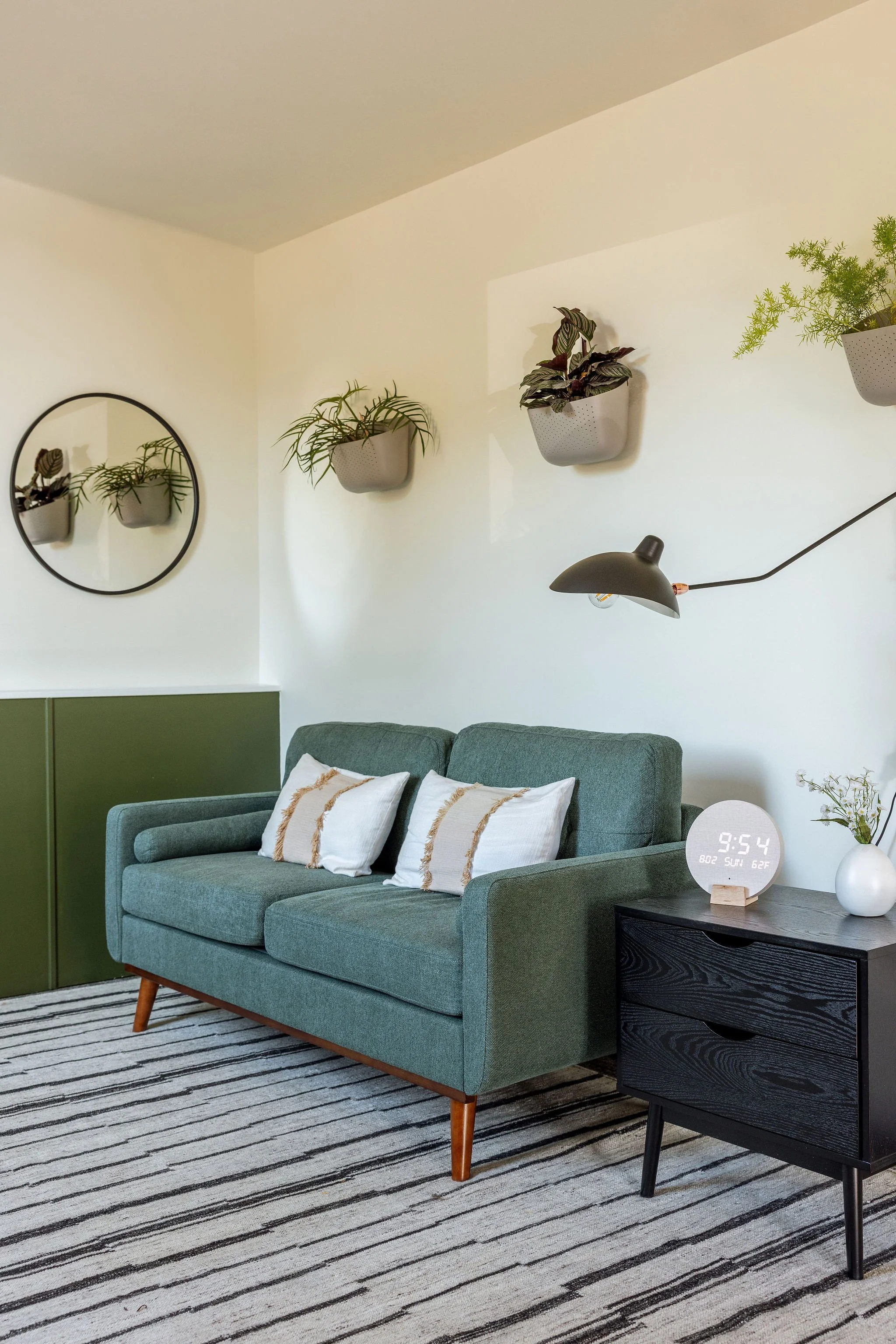
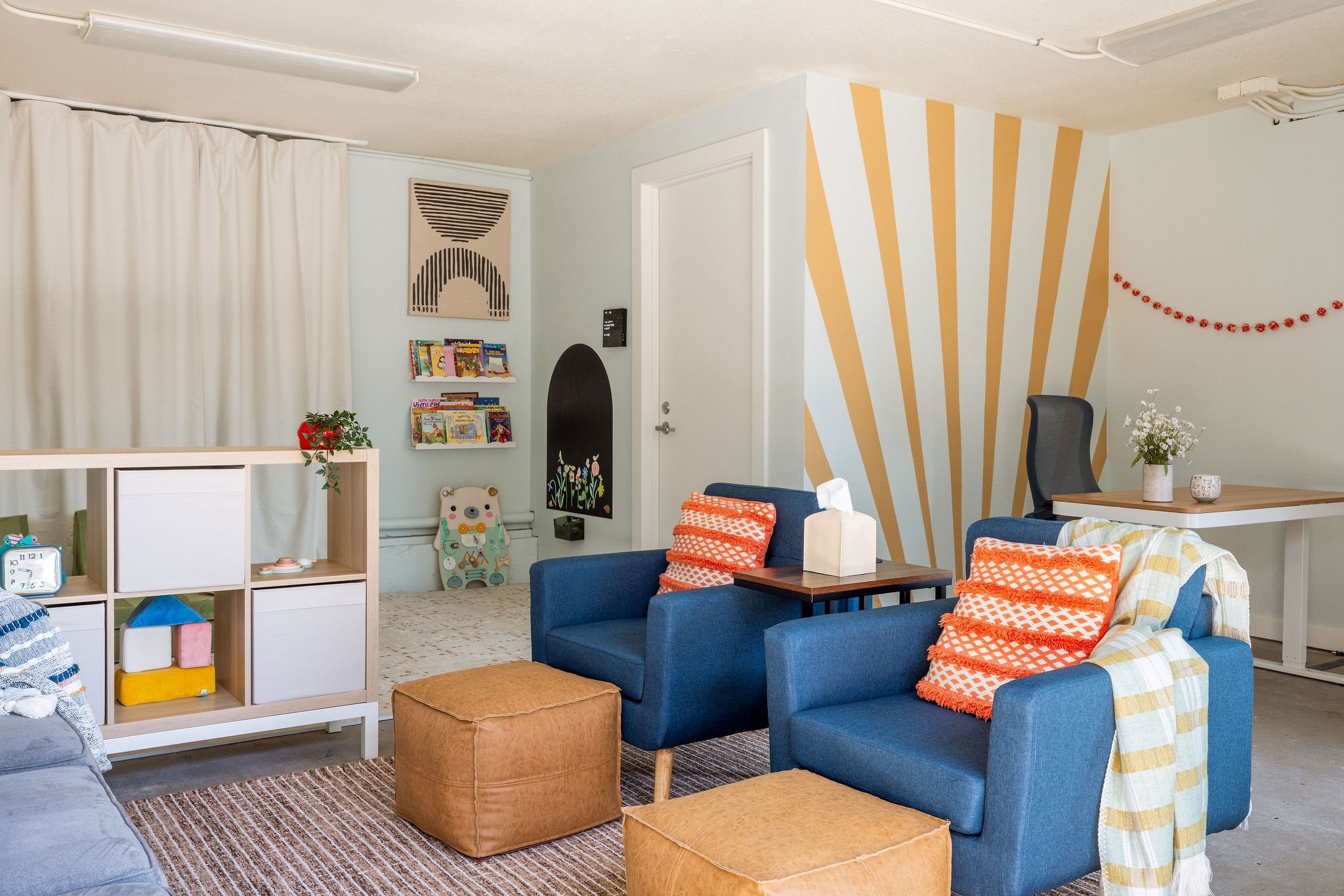
The session room tends to get chosen for how it looks rather than how it functions. What actually determines whether it works as a therapeutic environment comes down to a few things most people don't think to design for:
Where the client sits in relation to the door. This is a nervous system decision, not an aesthetic one. The arrangement of seating also communicates something about the therapeutic relationship before anyone has said anything.
Acoustics and the feeling of privacy. If a client spends any part of the session wondering whether they can be heard, the room is working against you. Sound masking and proper door sealing are the least glamorous decisions in a therapy space and consistently among the most important.
Light control across the day. A room that works at 10am can feel completely different by 3pm. Window treatments that allow for real variation mean the room holds the same quality across the whole day — rather than the practitioner managing ambient discomfort on top of everything else they're holding.
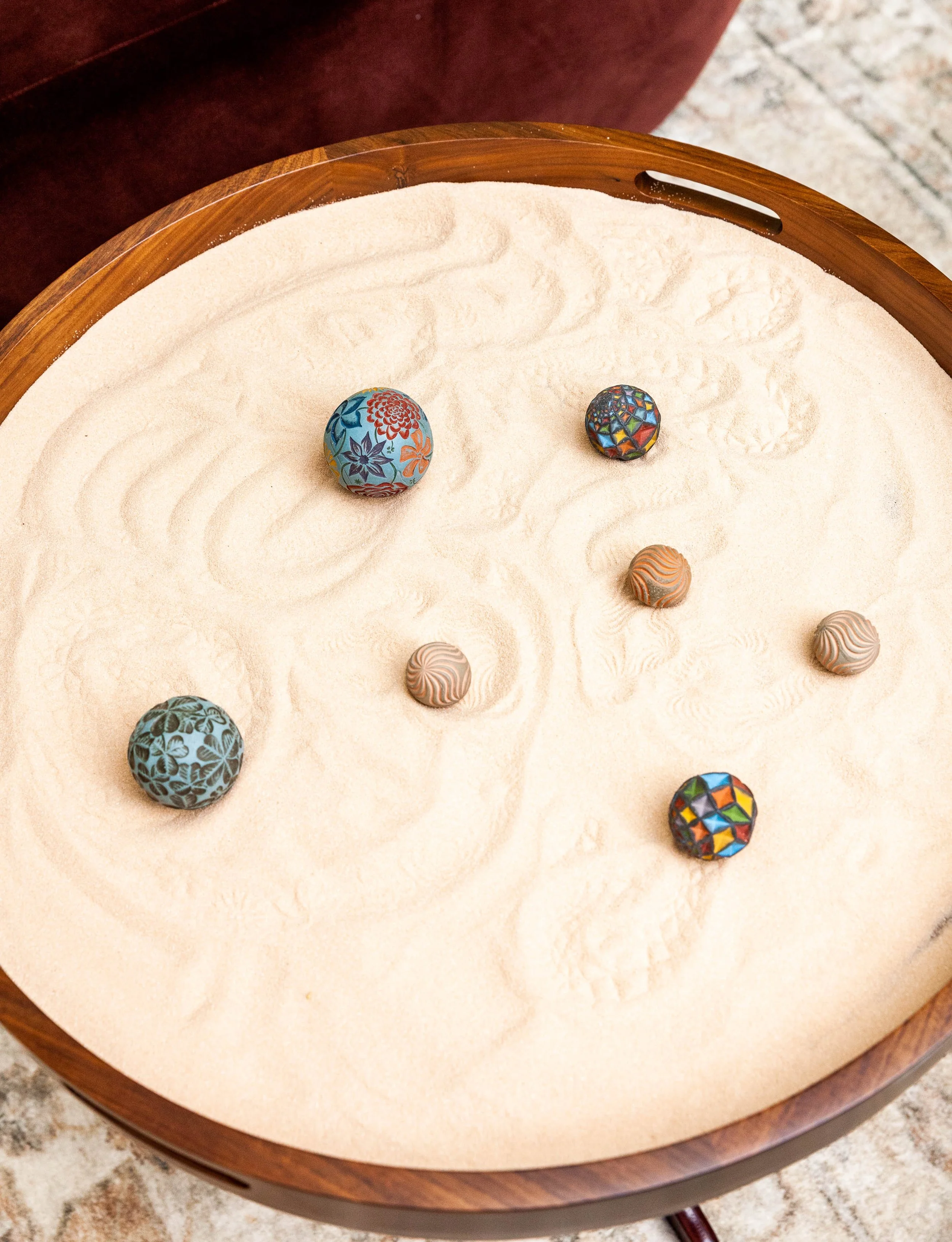
Where the eye rests. A room where every surface competes creates a restlessness that accumulates over a session. One point of calm visual interest, something with texture and depth, gives the mind permission to settle.
You've spent years studying how the brain processes safety.
The room can do a surprising amount of that work before you ever say hello. When it does, what you have when a client sits across from you is someone who has already started to arrive, rather than someone still bracing against the environment on their way in. That's not a small thing. It's the difference between a session that spends its first ten minutes finding ground and one that can go somewhere from the start.