Practical Ways to Change How a Room Feels (Portland + PNW Edition)
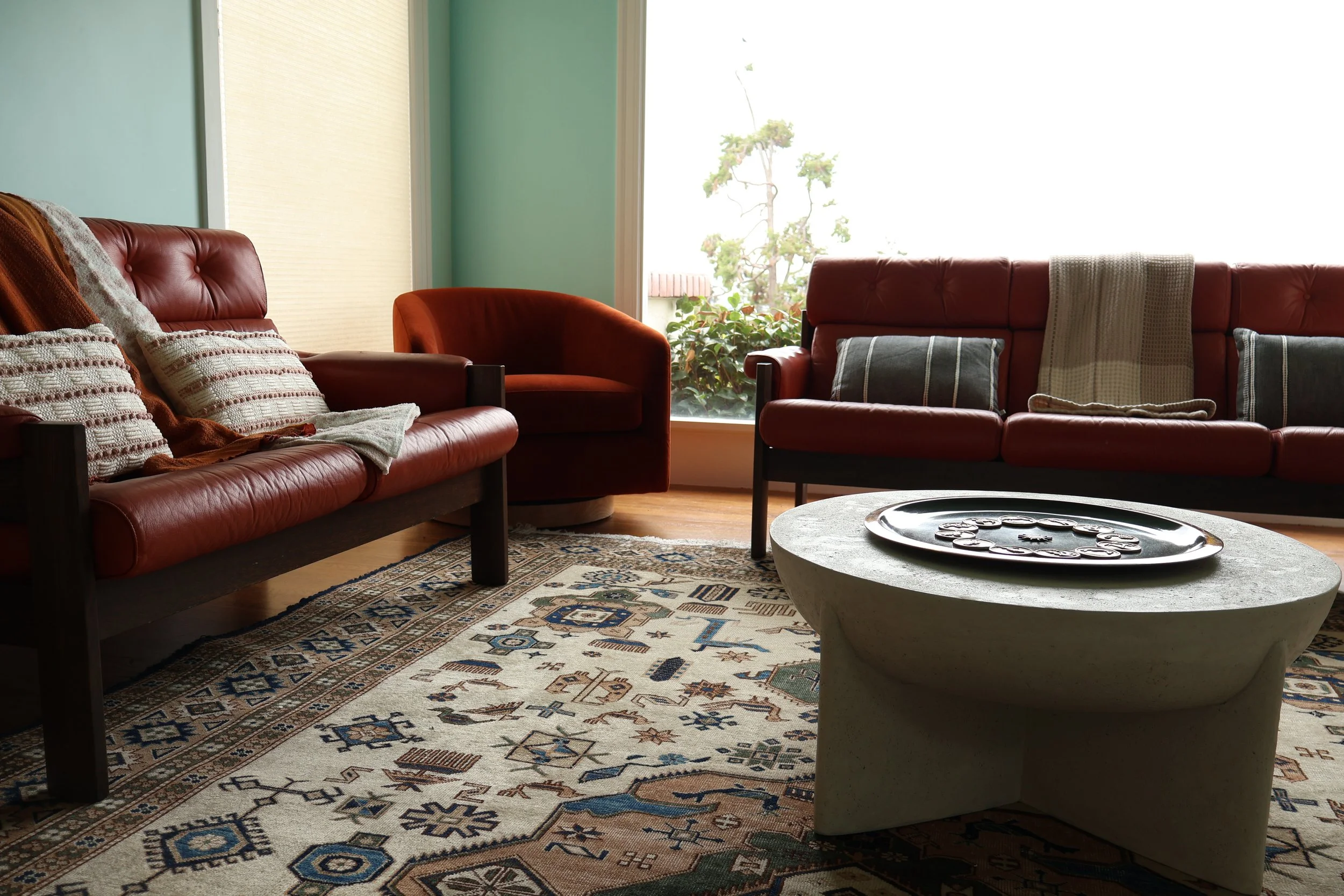
Most rooms don’t need a full redesign. They need a few smart moves in the right order.
If your space feels flat at night, restless in winter light, or somehow “done” but not quite soothing—you’re not imagining it. In the Pacific Northwest, our homes have to work harder because the light is inconsistent and the evenings are long.
The good news: you can shift how a room feels without swinging a sledgehammer.
Start here (choose what matches your problem)
If your home feels harsh or wired at night → start with #1 and #2
If it feels flat / one-note → start with #3 and #4
If it feels cluttered or visually busy → start with #5 and #6
If it feels echo-y or unsettled → start with #7
Want help translating this into your actual rooms and routines? Book a Biophilic Design Consultation and we’ll map a simple, room-by-room plan for light, materials, and plant moments that work in Portland’s seasons.
I’m sharing the tactics I use most often with clients as a Portland interior designer focused on biophilic design—approachable ways to calm visual noise, bring in more life, and make your home feel better to be in, without remodeling or over-decorating.

1) Build a simple layered lighting plan (ambient / task / accent)
If you do only one thing this month, do this.
A single overhead fixture flattens a room. It can also make a space feel clinical or unfinished, even if the furniture is beautiful. Biophilic interiors feel restorative in part because the lighting has depth and rhythm.
Here’s the simplest lighting layer plan:
Ambient: a soft overall glow (often lamps; sometimes recessed on dimmers)
Task: focused light where you work (kitchen, reading chair, desk)
Accent: depth and “life” (picture light, uplight on a plant, LED in a cabinet)
Quick start rule of thumb: aim for two lamps per main living space, plus a dedicated task light where you read or work. Put as much as you can on dimmers.
Lighting isn’t only about seeing. It sets the pace of a room. If your evenings feel a little keyed up, your lighting is often part of the story.
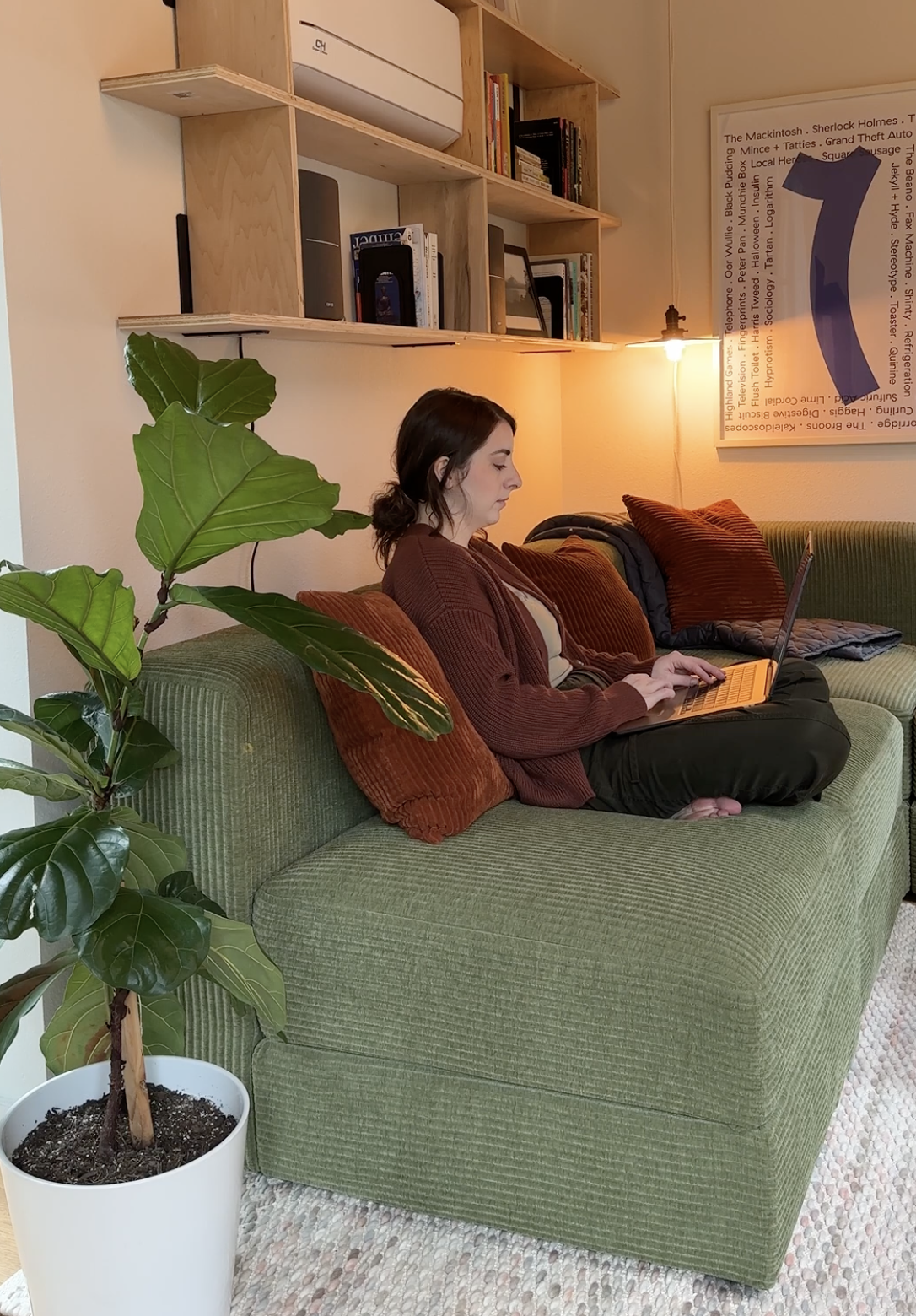
2) Swap bulbs + add dimmers (the fastest nervous-system reset)
If your home feels “too bright” at night, it’s often not the number of fixtures—it’s the quality of light.
Try this:
Use warm bulbs in living spaces and bedrooms (avoid cool/blue light in the evening)
Add dimmers where possible (even one dimmer can change how a room lands)
Choose multiple smaller light sources instead of one bright center source
In the Pacific Northwest, this matters even more because winter days are shorter and grayer. Warm layered lighting helps your home feel steady when the sun disappears early.
3) Mix woods without chaos (anchor tone + repeat plan)
One common hesitation: “If I mix wood tones, will it look messy?”
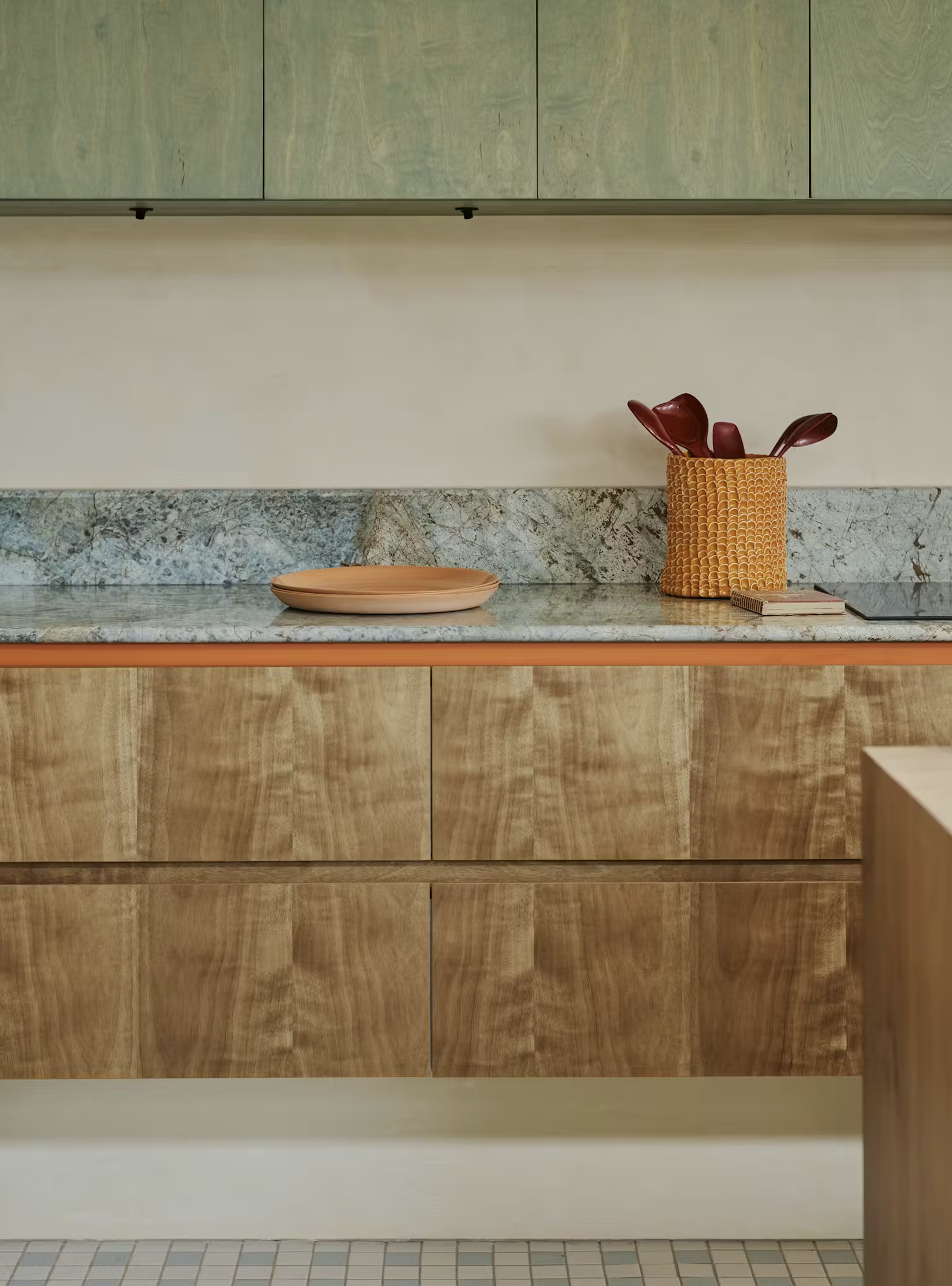
In practice, too much matching can make a home feel flat. Nature is varied—grain shifts, color shifts, texture shifts. Variation can feel more grounded when it’s intentional.
Use this repeat plan:
Choose one anchor tone (often your floor or a major cabinet finish)
Add one to two supporting tones (a warmer oak, a darker walnut, a painted piece with visible grain)
Repeat each tone at least twice so it looks planned (table + frame, bench + shelves)
This works with stone, clay, and woven materials too. A terracotta lamp, a wool rug, and a wood side table can do more for a room than another decorative object.
4) Add one handmade piece where you’ll actually use it
If everything in a home arrives at once from one place, rooms can feel a little dry—even when it’s “nice.”
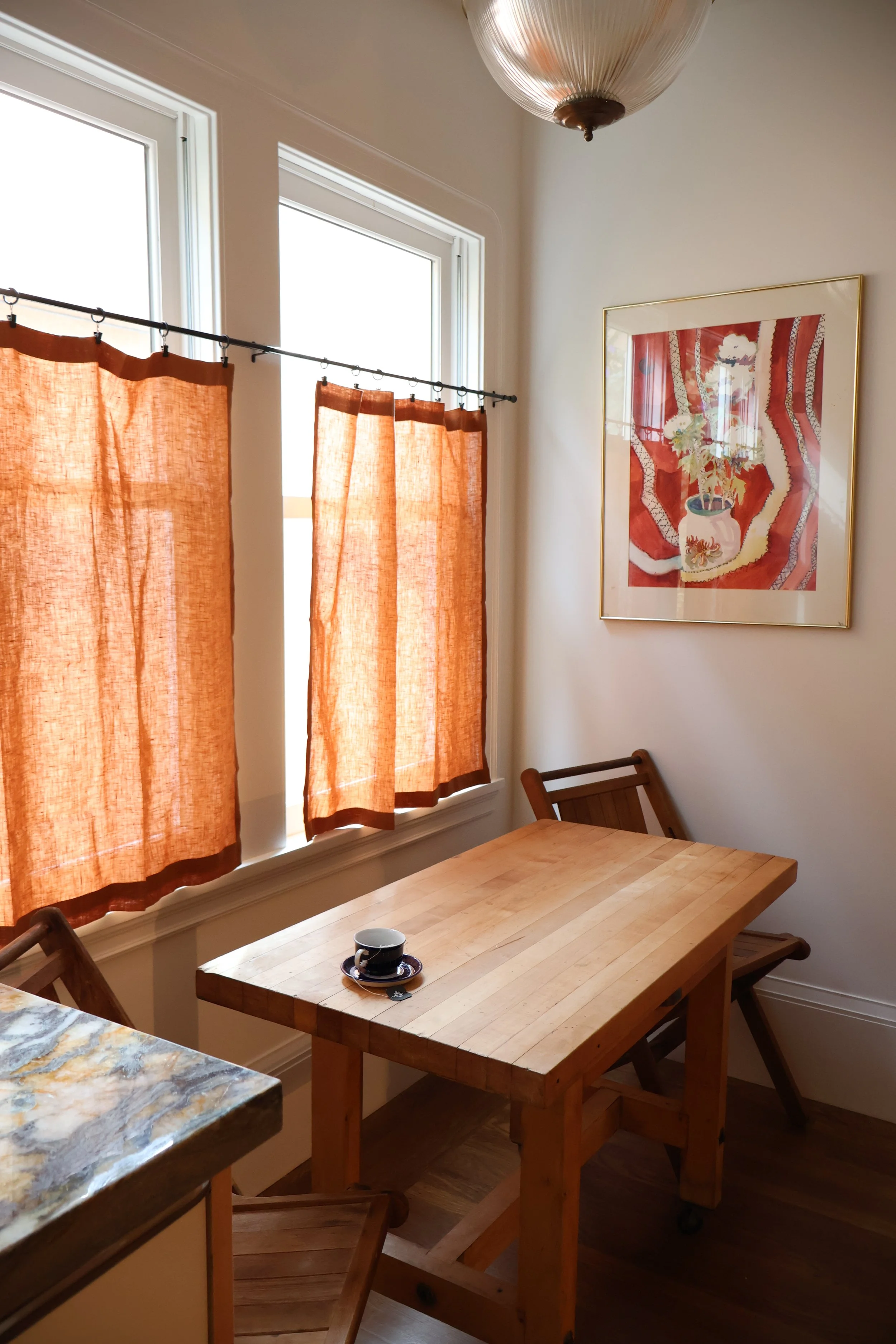
Handmade pieces bring subtle irregularity and texture your brain reads as real. The key is choosing something that gets handled, not just styled.
Ideas that actually earn their keep:
a ceramic bowl you use daily (keys, fruit, salt)
a hand-thrown mug set you reach for every morning
a woven basket that holds throws (instead of another storage bin)
a stool or small table with visible joinery
This is a subtle but meaningful biophilic move: it makes the home feel lived-in in a good way.
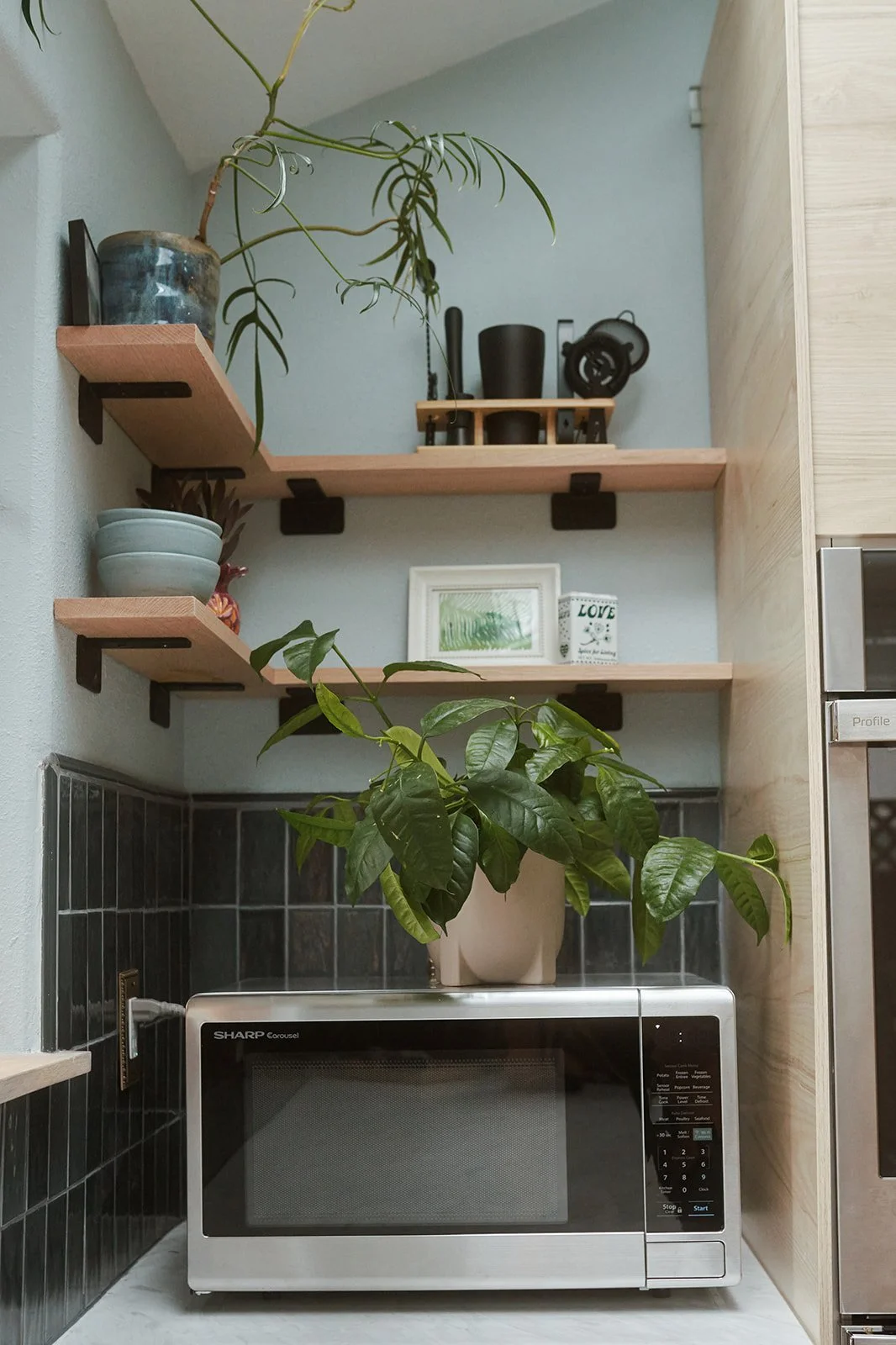
5) Create plant zones (anchor + trailing + micro moment)
Biophilic design is not a windowsill packed with plants you feel guilty about.
Instead of plant clutter, try plant zones:
One anchor plant per main room (a living sculpture with presence)
One trailing element (on a shelf, mantle, or high hook)
One micro moment (a small plant near the sink, bedside, or desk)
PNW low-light reality: If your home is light-limited, do fewer plants and place them where they can thrive. Your goal is life, not maintenance stress.
If you love plants but struggle to keep them happy, focus on the corners with the best natural light first. Then build out slowly.
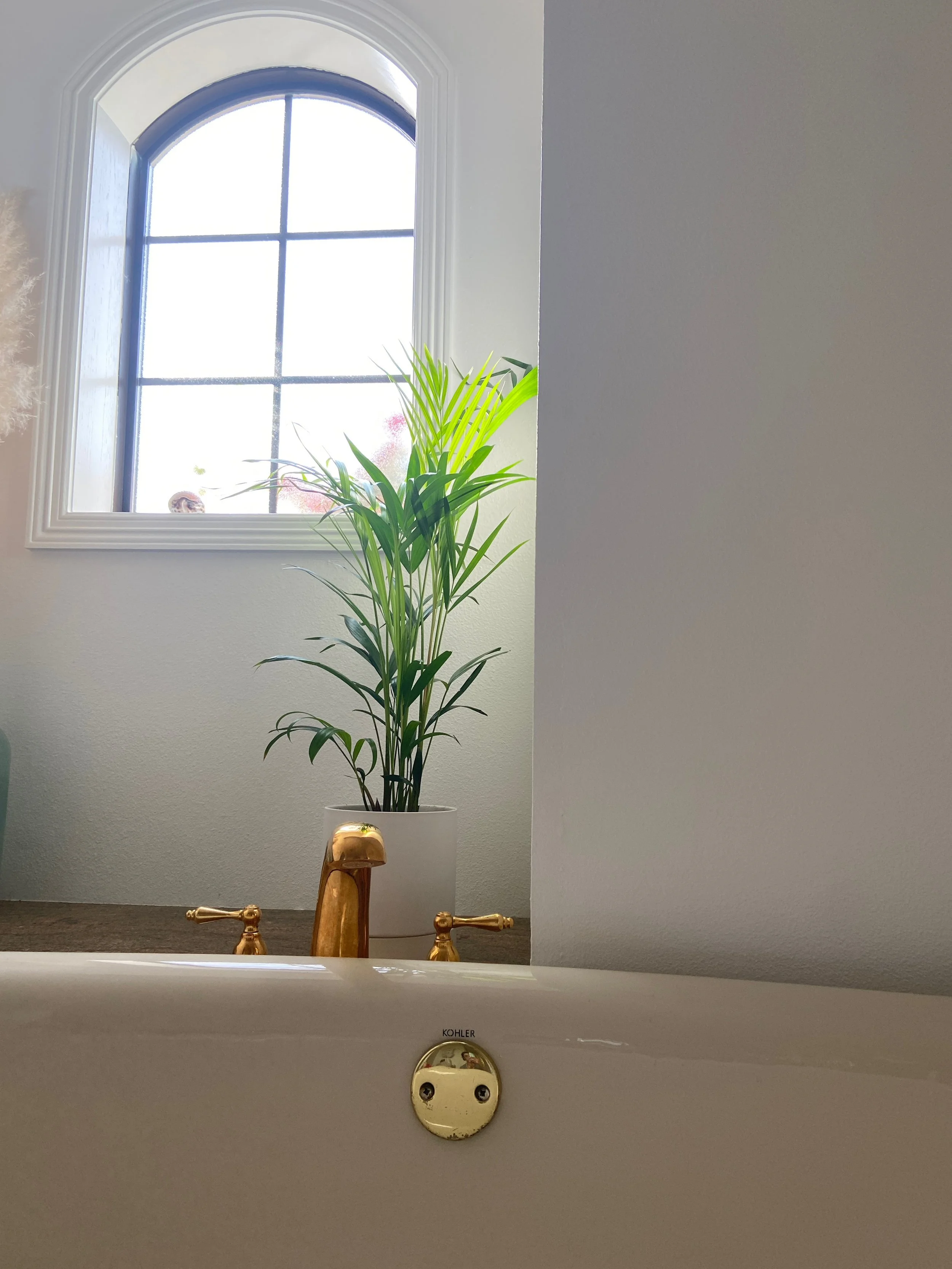
6) No view? Build an indoor “nature focal point”
Not every room has a great window or a pretty view. You can still create a place for your eyes to rest; one nature-forward focal point.
Options that work even in smaller spaces:
a tall plant with a soft uplight
nature-forward art (landscape, botanical, abstract organic forms)
a bowl of branches or seasonal greens on the table
a simple stone or wood object with presence and texture
The point is not to decorate. The point is to give the room a small “exhale.”
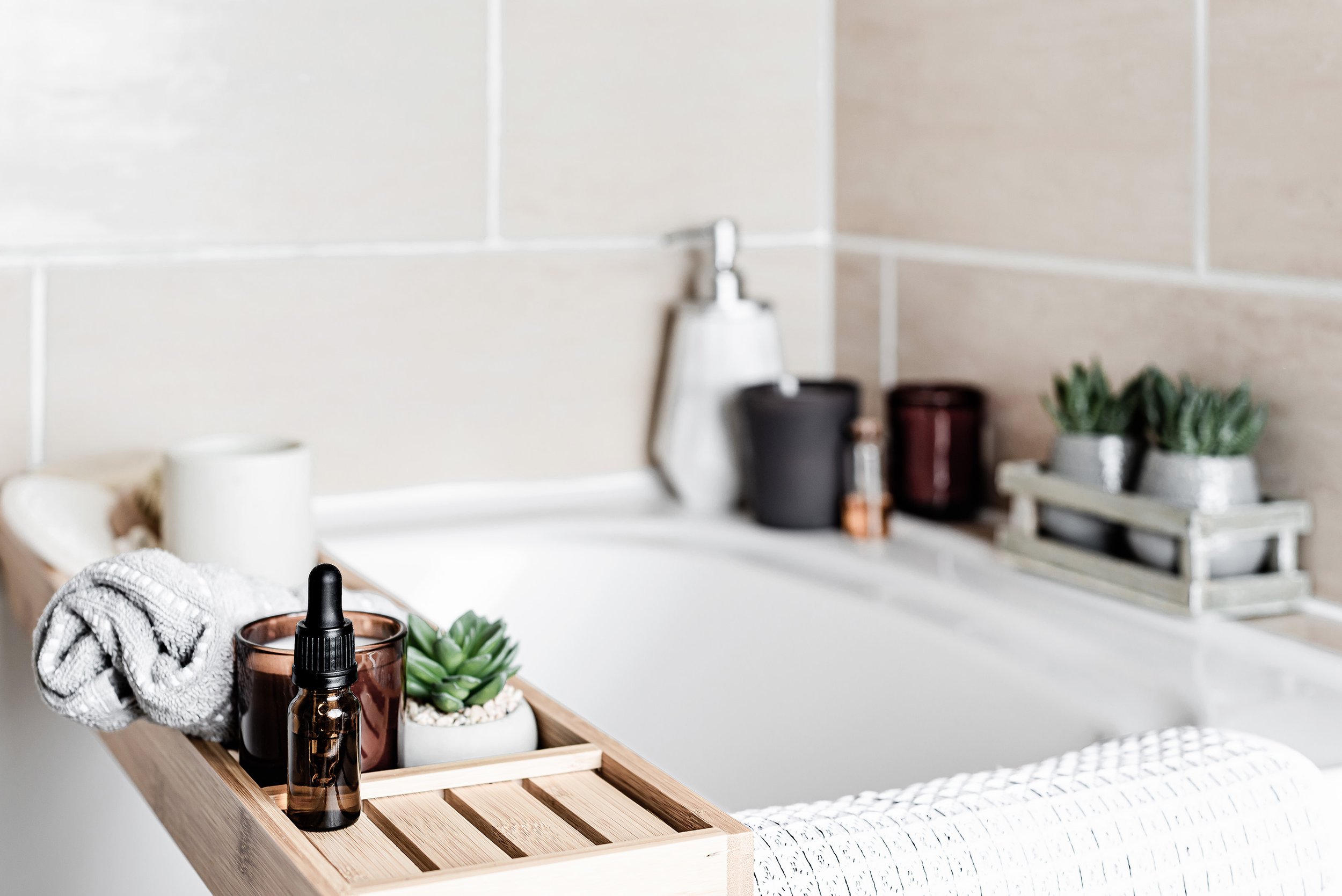
7) Quiet biophilia: soften sound + add a subtle scent ritual
Two often-missed levers in biophilic interiors: sound and scent.
If a room feels harsh or echo-y, try:
a wool rug (or a rug pad if you already have a rug)
linen curtains
upholstered seating or a textured throw
For scent, think subtle “home signals,” not overpowering fragrance:
a mild diffuser in the entry
a cedar sachet in a closet
a simple evening ritual you actually enjoy
This is small, but it’s real. Your body learns the cue: you’re home now.
If you’re ready for a home that feels calmer at night and more grounded all winter, a Biophilic Design Consultation is the next step. You’ll get targeted guidance for your exact space, plus a room-by-room plan you can implement without second-guessing every purchase.