Portland-area homeowners run into a specific kind of design problem: the house looks finished, but it still feels a little restless to live in—especially at night or during winter light.
Most people try to solve that by adding more decor: another throw pillow, more art, another cart of “nice” things. Sometimes it helps. Often it just adds visual noise.
Biophilic design flips the approach. It starts with what your body notices first: light that feels steady, materials that feel grounded, and a sense that the space has some life in it.
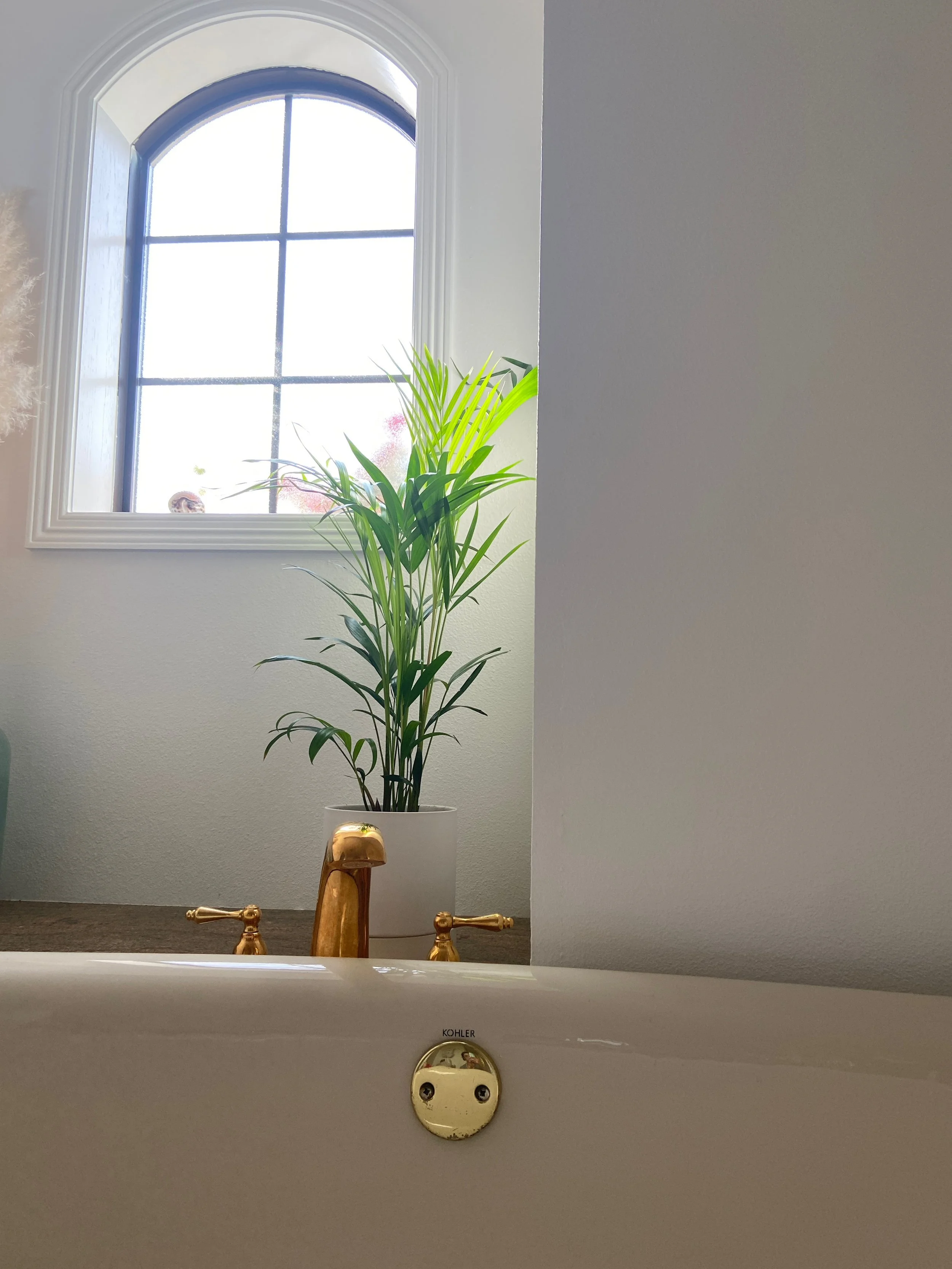
If your home looks finished but doesn’t feel good to be in, it’s usually one (or more) of these:
the light feels harsh or flat after dark
the room lacks grounding texture (everything feels smooth/shiny/anonymous)
the space doesn’t support real routines (so it never fully relaxes).
If you want a calmer, more nature-connected home without remodeling, focus on three approaches:
Layered light (daylight + warm layers at night)
Natural materials (real texture, especially where your hands land)
Flow (zones that match how you actually live)
Plants can help, but they’re not the whole point. Biophilic design is less about “adding green” and more about building steadier light, grounded texture, and breathable flow—something a Portland interior designer should take seriously, given our light and climate.
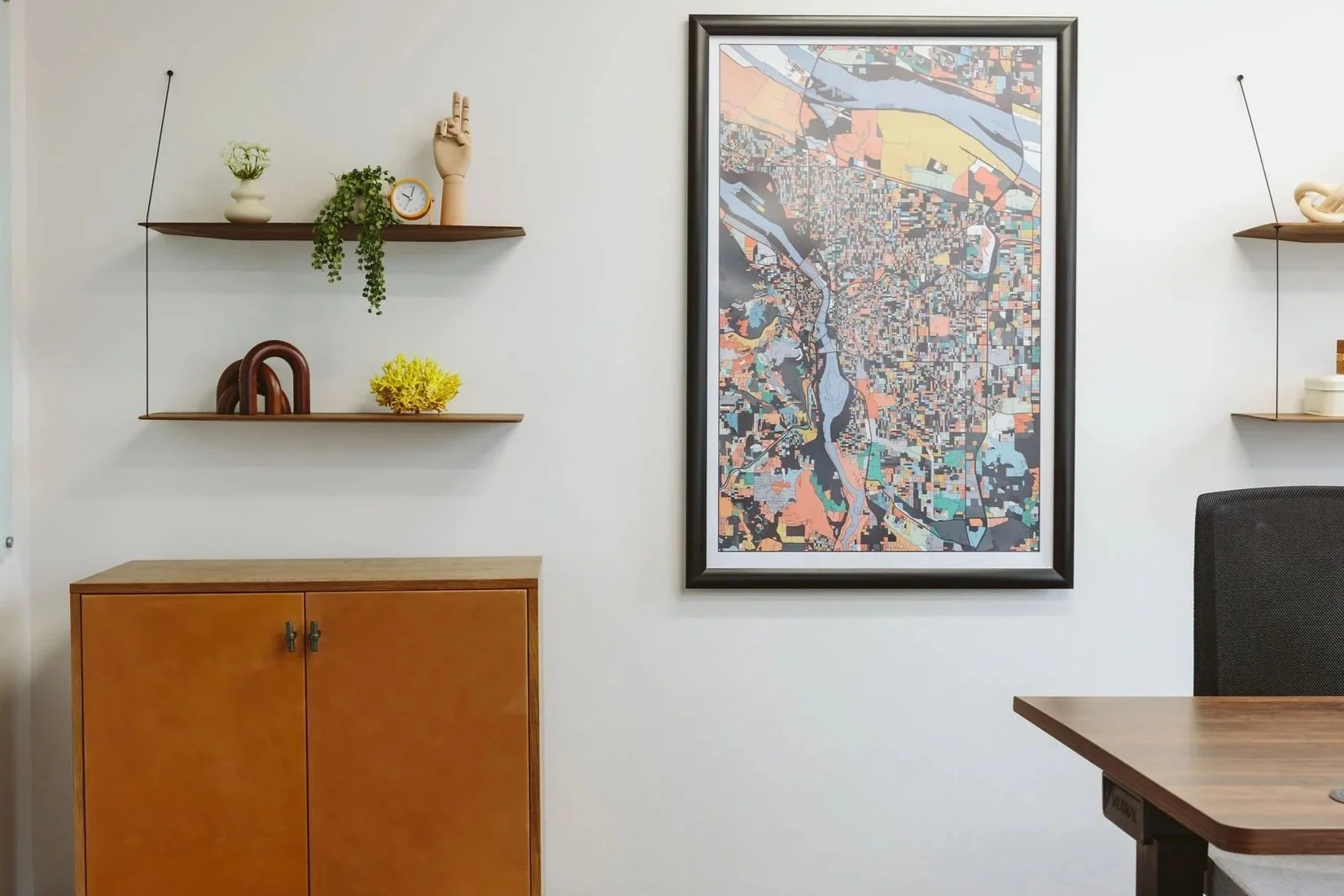
A quick diagnostic: why your space still feels unfinished
Answer these with a simple yes/no:
At night, do you rely mostly on one overhead light?
Do evenings feel too bright, too stark, or hard to “settle into”?
Does the room feel echo-y or “hard” (lots of bare surfaces)?
Do you have a dark corner you keep trying to fix with more decor?
Do you buy things, but the room still feels flat or sterile?
Do you have plants, but they feel like clutter or guilt maintenance?
If you answered yes to 2 or more, you don’t need more stuff—you need a better plan.
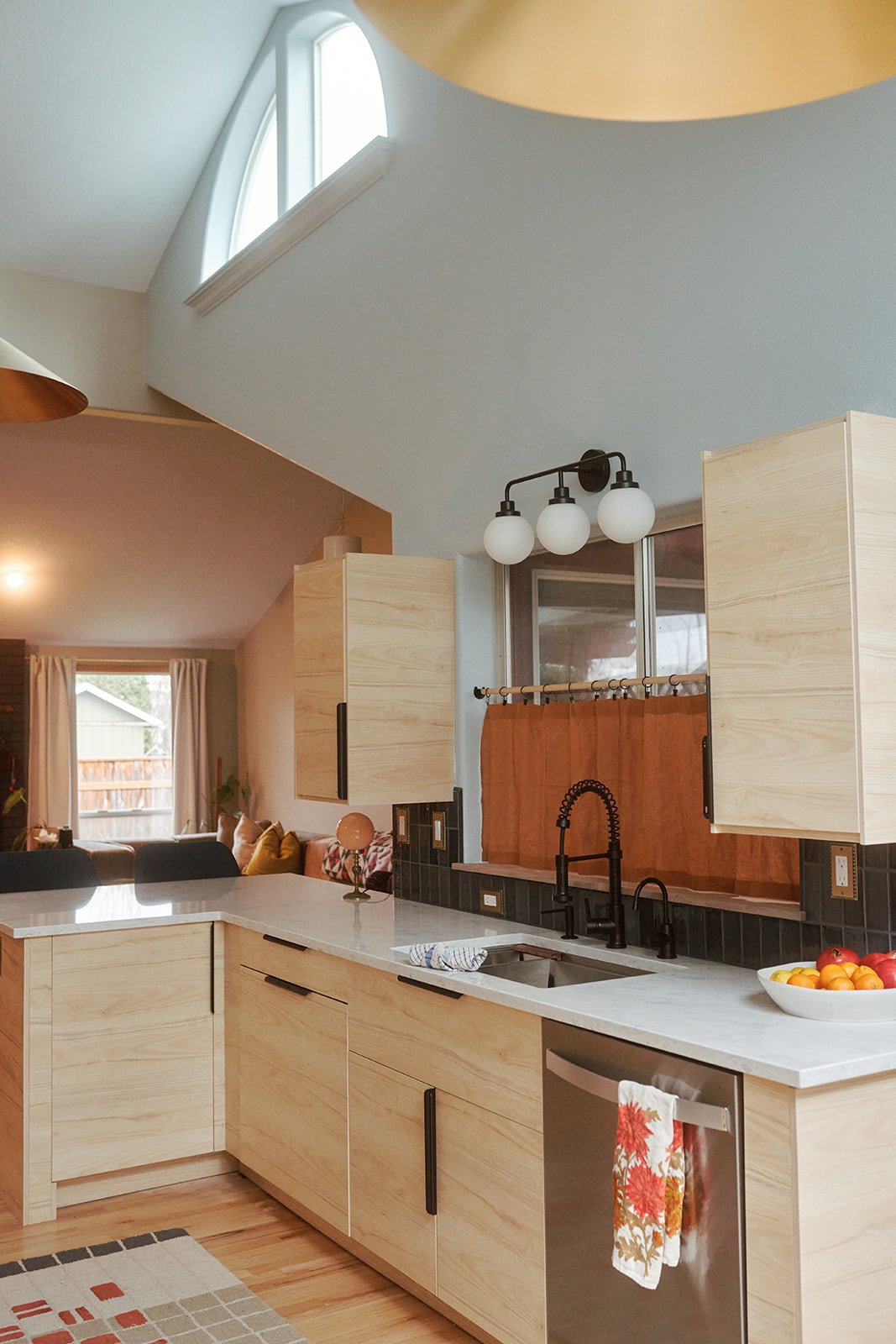
Three foundations of a nature-connected home.
1) Light: natural by day, warm layers at night
A room can be beautifully furnished and still feel sterile if the light is harsh, flat, or overly bright overhead. Your nervous system reads lighting as information: time of day, safety, energy level, wind-down cues.
2) Natural materials: texture, touch, honesty
Biophilic interiors tend to feel good because they’re tactile. Wood grain, wool, linen, clay, stone—materials with variation and depth create a subtle “realness” your brain recognizes.
3) Flow: zones that reduce friction
Flow is not about having an open floor plan. It’s about having enough breathing room and logical “homes” for daily life: shoes, bags, mail, morning coffee, downtime.
room and logical “homes” for daily life: shoes, bags, mail, morning coffee, downtime.
Book a Biophilic Design Consultation
If you want help applying these foundations to the rooms that still feel “off,” book a Biophilic Design Consultation. We’ll look at your lighting, materials, and layout, then map targeted changes that make your home feel calmer, more grounded, and easier to live in—especially in Portland winter light.
You don’t need a full remodel. You just need the right adjustments in the right places.