Color is often where design projects stall.
Not because people don’t care, but because they care too much. Every choice feels permanent. Every sample feels wrong in a different way. And suddenly, picking a paint color feels heavier than it should.
If that sounds familiar, the issue usually isn’t color.
It’s the way the decision is being approached.
Color Is a Response, Not a Starting Point
One of the biggest misconceptions about interior design is that color comes first.
In reality, color works best when it responds to:
the light in the room
how the space is used
the materials already present
the overall mood you want to live with
When those things aren’t clear yet, color decisions feel arbitrary. That’s when overthinking kicks in.
Color settles more easily when it’s answering a question, not creating one.
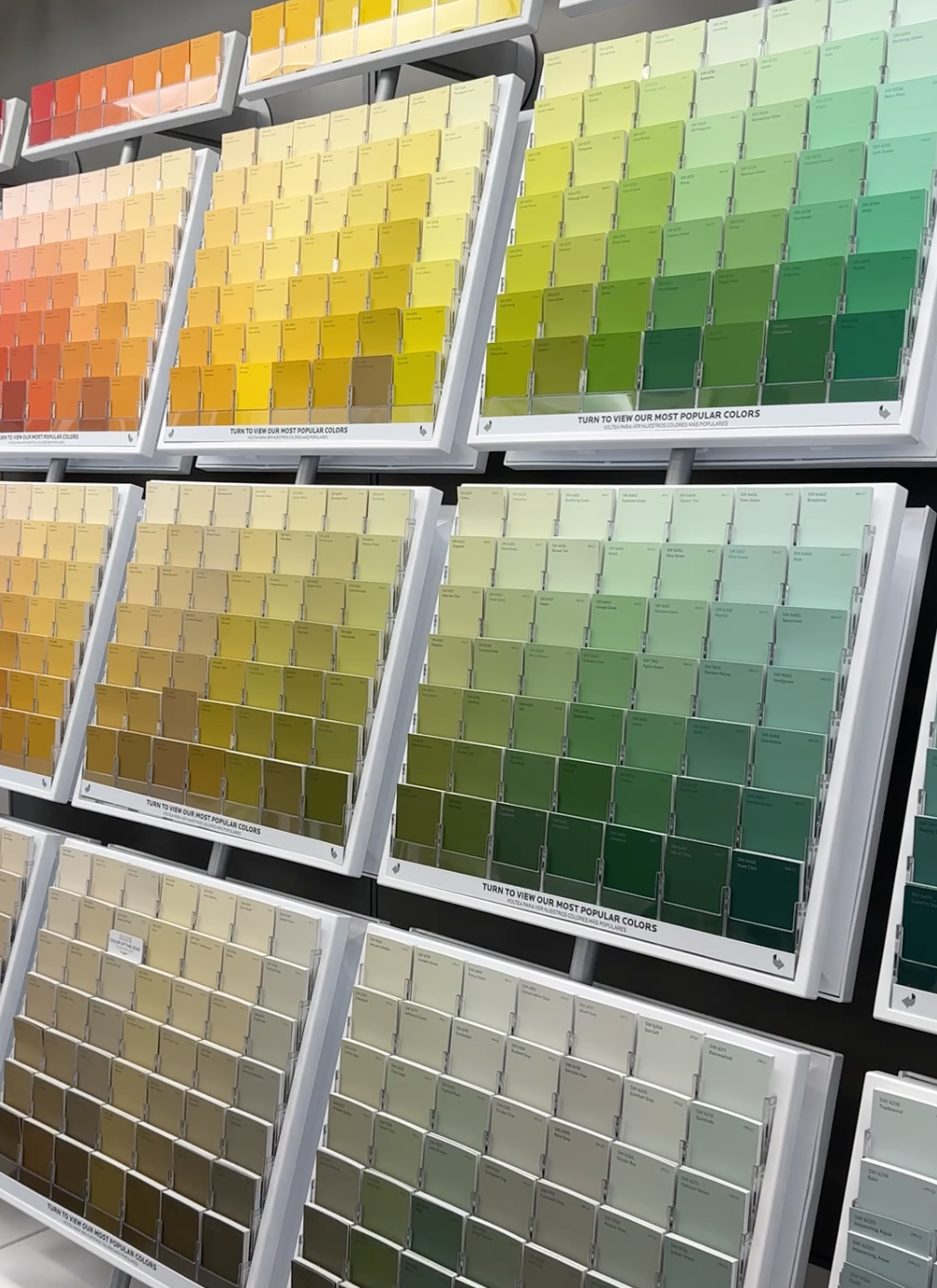
Why Paint Samples Feel So Confusing
Most people test paint in isolation.
A small square on the wall.
Different times of day.
Different reactions depending on the light.
That’s normal.
Color shifts constantly based on what’s around it. Furniture, flooring, finishes, and even plants all influence how a color reads. This is why a shade that looked perfect online can feel completely different in your home.
The problem isn’t your taste.
It’s that color doesn’t live on its own.
Let the Space Do Some of the Work
Instead of asking, “What color do I like?”
Try asking, “What does this room need?”
Some rooms benefit from warmth.
Others need softness.
Some need contrast.
Others need restraint.
When you approach color this way, the options narrow naturally. You’re no longer choosing from hundreds of swatches. You’re choosing from a smaller, more relevant range.
That’s when the decision starts to feel manageable.
Where Plants and Natural Elements Come In
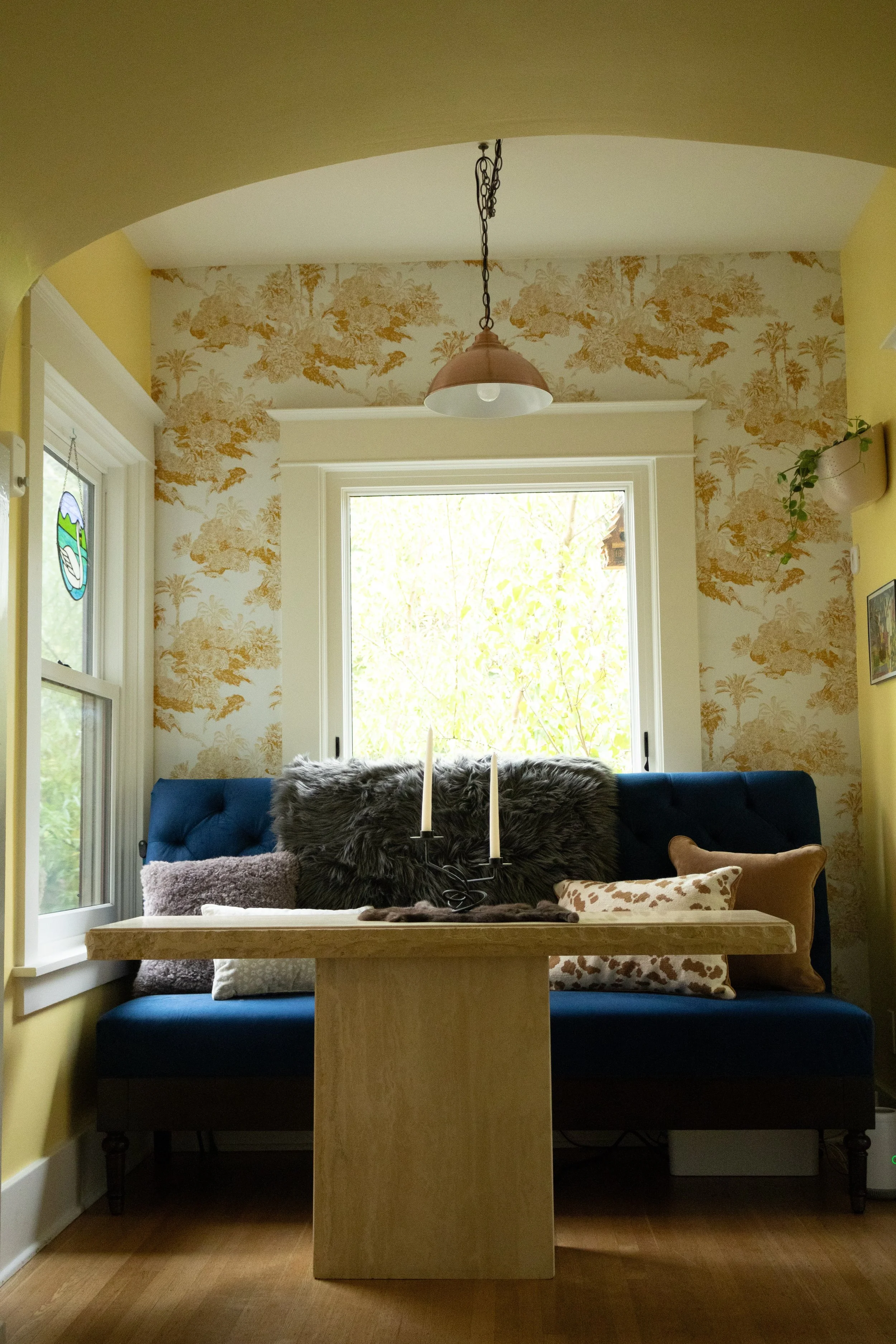
Natural elements are often helpful reference points when choosing color.
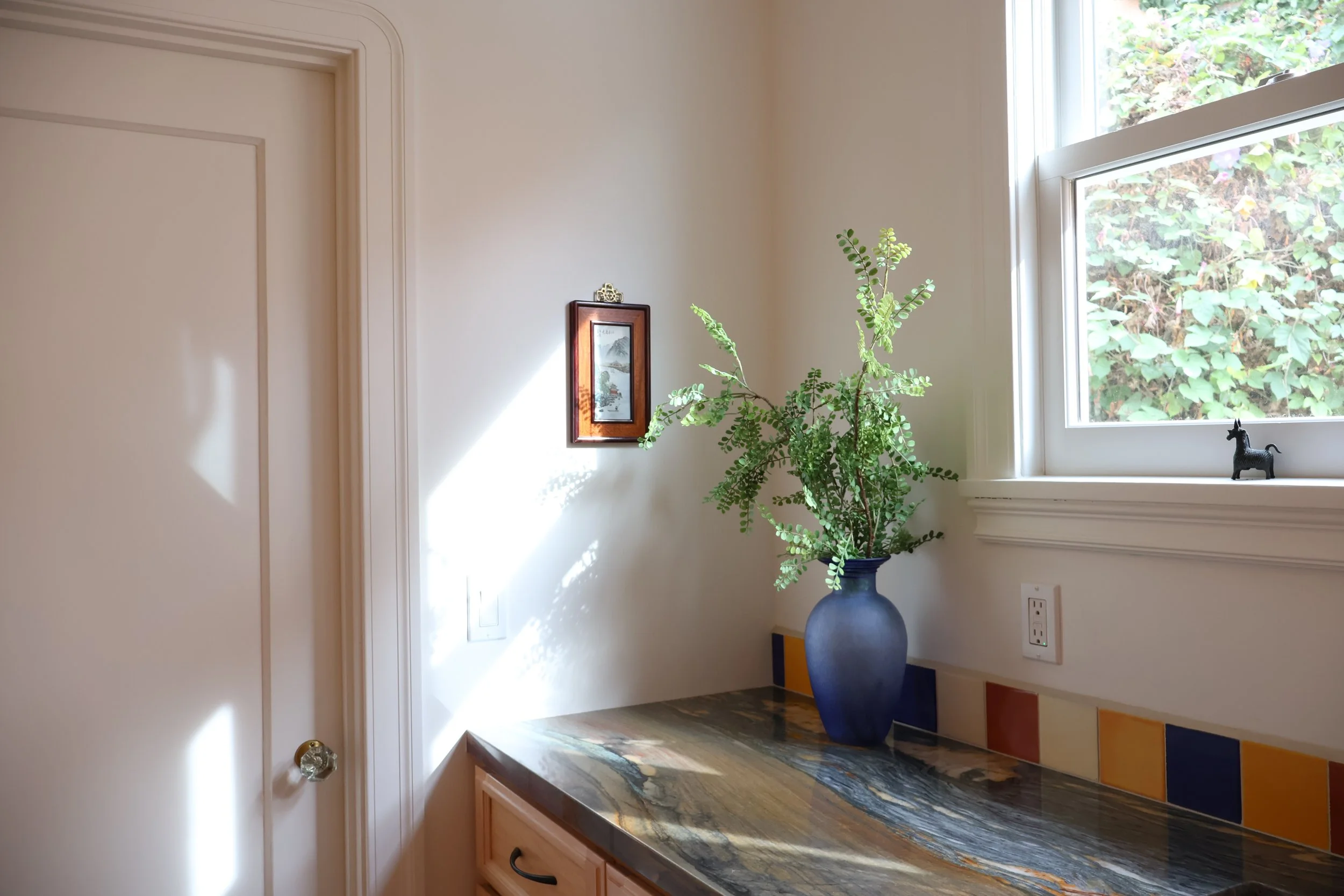
Wood tones, stone, textiles, and greenery introduce variation that makes color feel more grounded. They soften edges and help paint colors feel less stark or flat.
This doesn’t mean designing around plants. It means letting natural elements quietly support the palette instead of competing with it.
My Sprout therapy office design project is a great example of this.
Overthinking Is Usually a Sign You’re Too Zoomed In
When color decisions feel exhausting, it’s often because you’re trying to solve them in isolation.
Color works best as part of a bigger picture. Layout, flow, and how the space functions all influence which colors will feel right long-term.
When those pieces are clear, color becomes the final layer, not the foundation.
A Calmer Way to Move Forward
If choosing colors feels harder than it should, it’s usually a sign to pause, not push.
I put together a short resource that helps you step back and look at your home more holistically, starting with layout and flow before diving into details like color.
If you want a calmer place to begin, you can download the Calmer Home guide here.
It’s designed to help you understand what your space needs next, without overthinking every decision along the way.